

Dartmouth Pioneers AI Approaches to Mental Health
Clinical research and a well-being platform designed by students and faculty showcase Dartmouth's investment in mental health innovation.


Dartmouth Pioneers AI Approaches to Mental Health
Clinical research and a well-being platform designed by students and faculty showcase Dartmouth's investment in mental health innovation.

Dartmouth researchers are advancing two complementary strategies to address mental health: a clinical trial validating the efficacy of generative AI therapy, and an interactive campus-wide platform designed by students and faculty that promotes everyday well-being through privacy-first, evidence-based support.
First Randomized Controlled Trial of Generative AI Therapy
A Dartmouth-led team conducted the first randomized controlled trial to evaluate how well a generative AI-powered therapy chatbot can provide treatment to people diagnosed with depression and anxiety, as well as eating disorders. The trial used a platform developed at Dartmouth called Therabot.
Therabot demonstration video
The study enrolled participants with moderate symptoms and randomly assigned them to either the AI intervention or a control condition. Unlike rule-based chatbots that are limited to scripted responses, Therabot is designed to deliver dynamic, personalized conversation grounded in cognitive behavioral therapy principles.
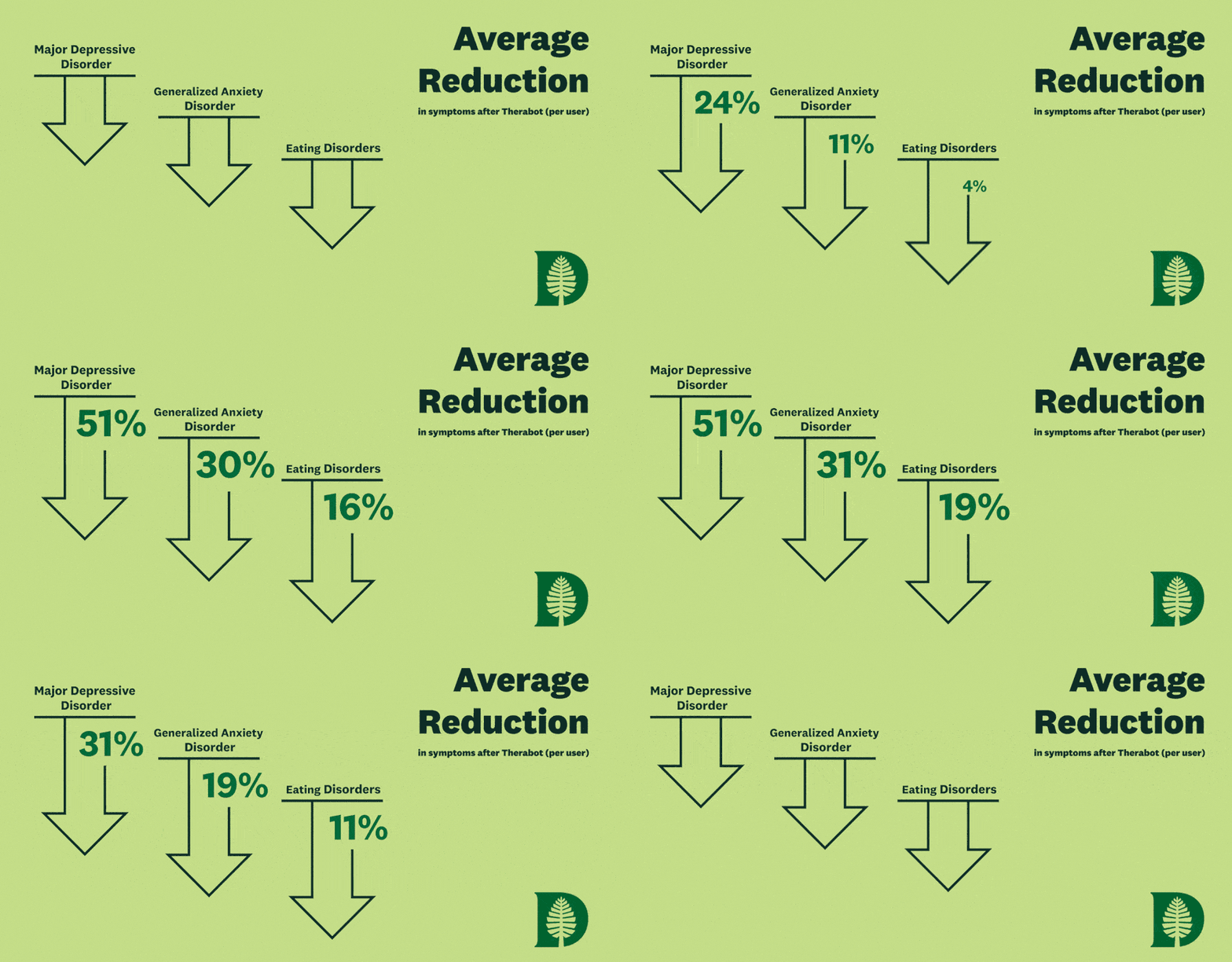
The trial showed that using Therabot resulted in statistically significant symptom reduction, with effect sizes comparable to working with a mental health professional. The findings address a critical gap: while hundreds of mental health apps have reached consumers, few have undergone rigorous clinical evaluation. This trial establishes empirical evidence that generative AI can produce meaningful clinical improvement—not merely user engagement.

Evergreen: Building Resilience Before Crisis
Parallel to its clinical research, Dartmouth has developed Evergreen—an interactive generative AI-based platform built by students and faculty that is focused on everyday well-being. While a platform like Therabot supports people experiencing symptoms, Evergreen works upstream to guide and reinforce students by building resilience, promoting flourishing, and connecting students to the campus community.
The platform offers:
● Privacy-first architecture: Participation is voluntary and data collection—which generates personalized insights for individual students alone—is optional. The platform adapts to students' schedules and lifestyles via context-aware remote sensing technology and comprehensive access to campus systems for course schedules, nutritional data from campus dining, and other aspects of student-life.
● Science-backed recommendations: Evergreen draws on Dartmouth's foundational work expansive body of work on undergraduate well-being to deliver brief check-ins calibrated to each student's current well-being, habits, and goals. The platform's adaptive ability stems from years of research at Dartmouth into predictive technology, particularly the landmark StudentLife study. As the longest longest remote-sensing study ever conducted, StudentLife showed that an app on students’ phones could be used to measure and understand their mental health.
● Community connection: Rather than containing support within an app, Evergreen directs students toward real people, campus programs, and in-person resources.
The initiative is led by faculty from Dartmouth's Center for Technology and Behavioral Health, including researchers specializing in computational approaches to mental health and personalized intervention.


Setting the Standard
Few institutions are investing in both foundational research and campus-wide implementation at this level. Dartmouth is doing both—establishing evidence for what works while building tools that support students today.
Learn more about Dartmouth's leadership in mental health innovation
This custom content is sponsored by Dartmouth and developed by Inside Higher Ed's sponsored content team. The editorial staff of Inside Higher Ed had no role in its creation.


 Built with Shorthand