

How SMU helps students conquer fractions, the building blocks of mathematics
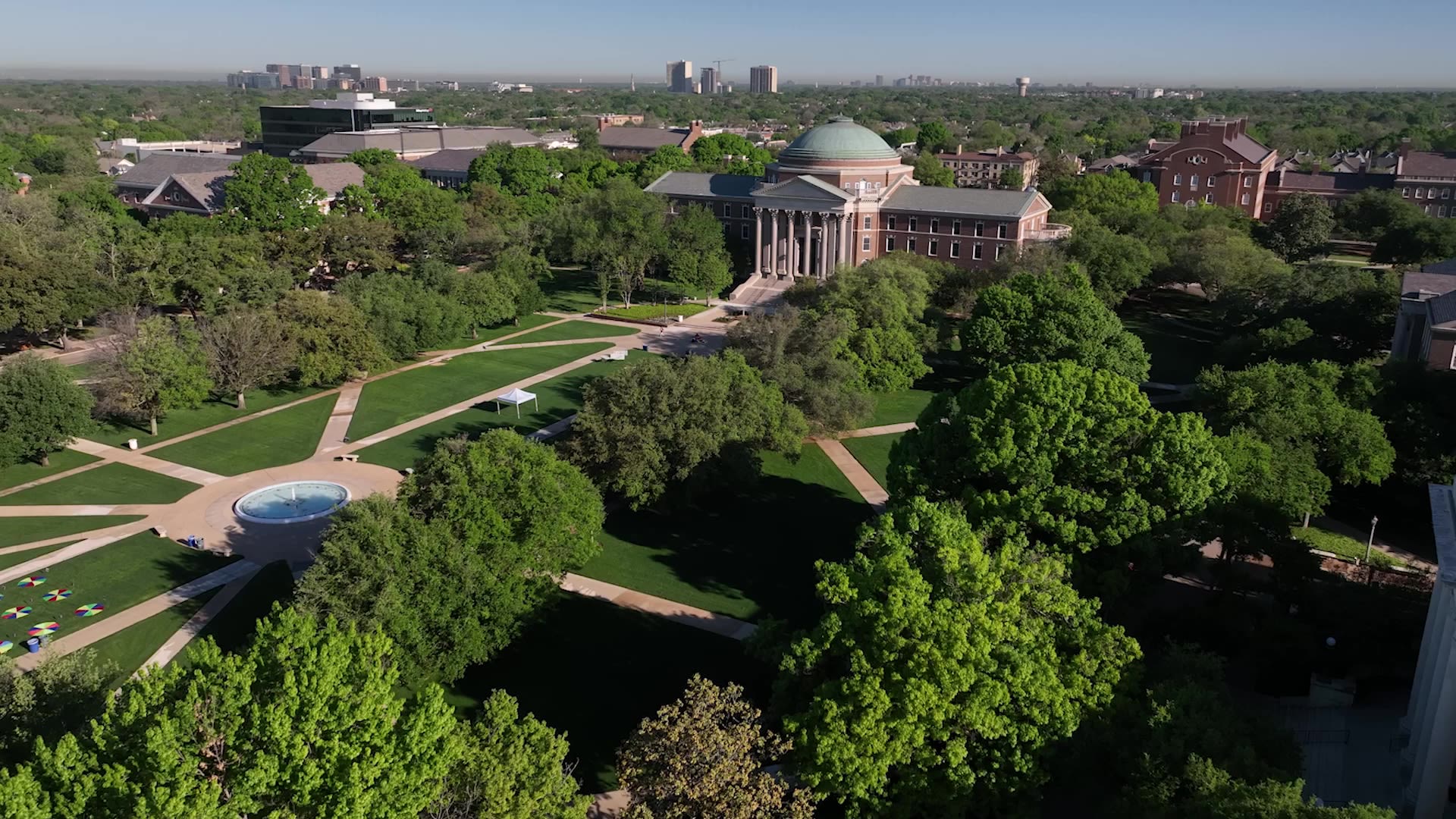
As a Research One (R1) university, SMU and researcher Leanne Ketterlin-Geller have been awarded a $14 million grant to improve math learning in the United States

SMU researcher Leanne Ketterlin-Geller has spent her career focused on a challenging, widespread problem: How do we help young students who have trouble learning math?
As a former high school science teacher, Ketterlin-Geller is passionate about setting students up for success. Her research is dedicated to foundational, early mathematics skills that set the groundwork for students’ future performance in high school, higher education and beyond.

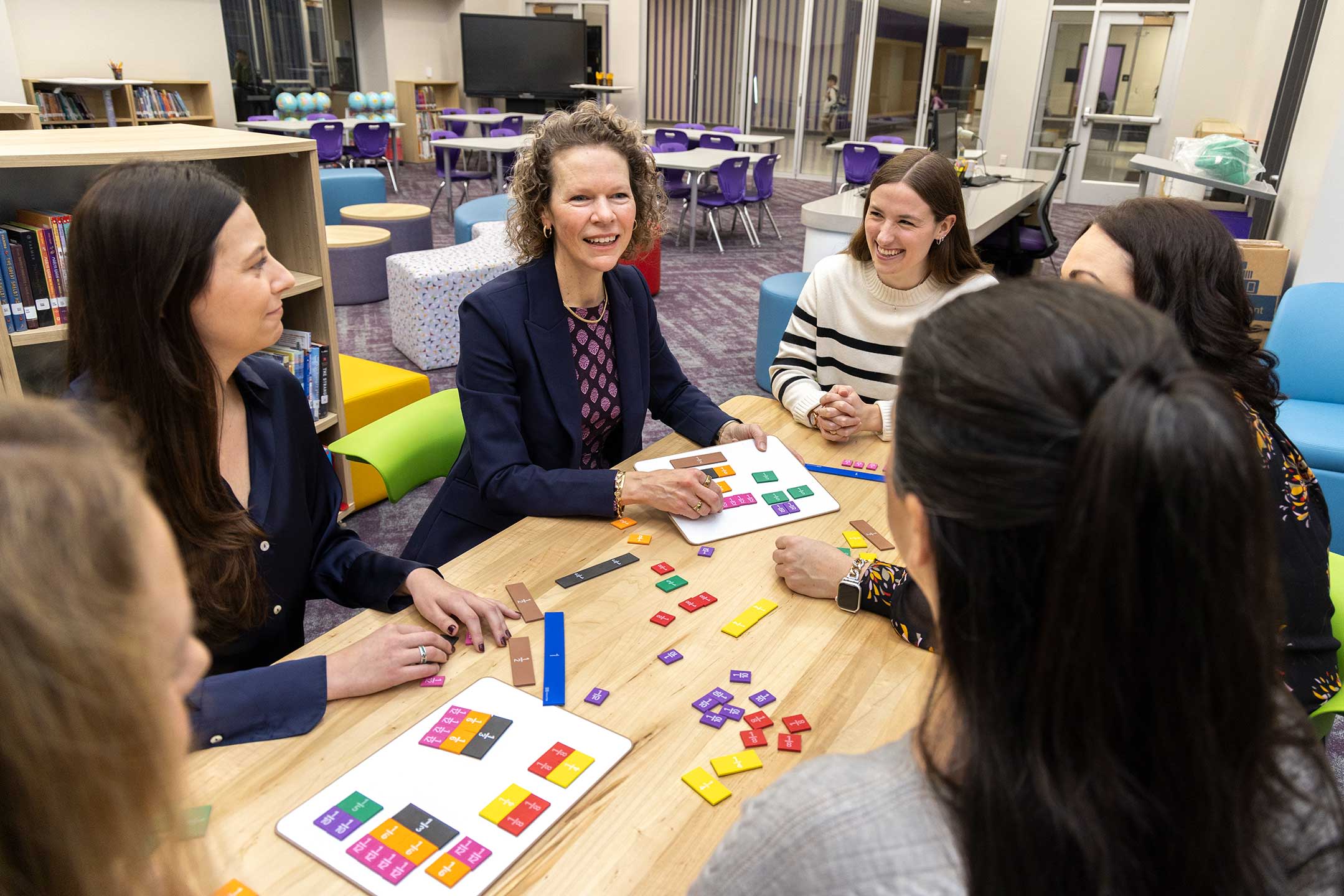
Leanne Ketterlin-Geller, professor of education policy and leadership in SMU’s Simmons School of Education and Human Development and the Texas Instruments Endowed Chair in Education. An internationally recognized math and special education researcher, Ketterlin-Geller also leads Simmons’ Research in Mathematics Education program.
Leanne Ketterlin-Geller, professor of education policy and leadership in SMU’s Simmons School of Education and Human Development and the Texas Instruments Endowed Chair in Education. An internationally recognized math and special education researcher, Ketterlin-Geller also leads Simmons’ Research in Mathematics Education program.
“A limited understanding of fractions is a major problem in schools because fractions are the gatekeeper for future success in algebra,” said Ketterlin-Geller, Texas Instruments Endowed Chair in Education and professor of education policy and leadership in the SMU Simmons School of Education and Human Development. “We’re working diligently to support kindergarten through eighth grade students as well as teachers and schools to help improve students’ math scores.”
Recent national and international test scores point to a significant drop in students’ outcomes in mathematics. To address this, Ketterlin-Geller was recently awarded a $14 million grant from the U.S. Department of Education to nationally scale a math intervention designed to help students improve their fraction skills. The grant is the highest single award total ever at SMU (Southern Methodist University), a private university in the heart of Dallas that recently achieved Carnegie Research One (R1) status, a prestigious designation that indicates high research activity.
“Mathematics is cumulative, so the skills that students learn in kindergarten and first grade are still with them as they move through elementary school, middle school and high school,” she said. “Foundational early skills really set the groundwork for all future mathematics performance.”

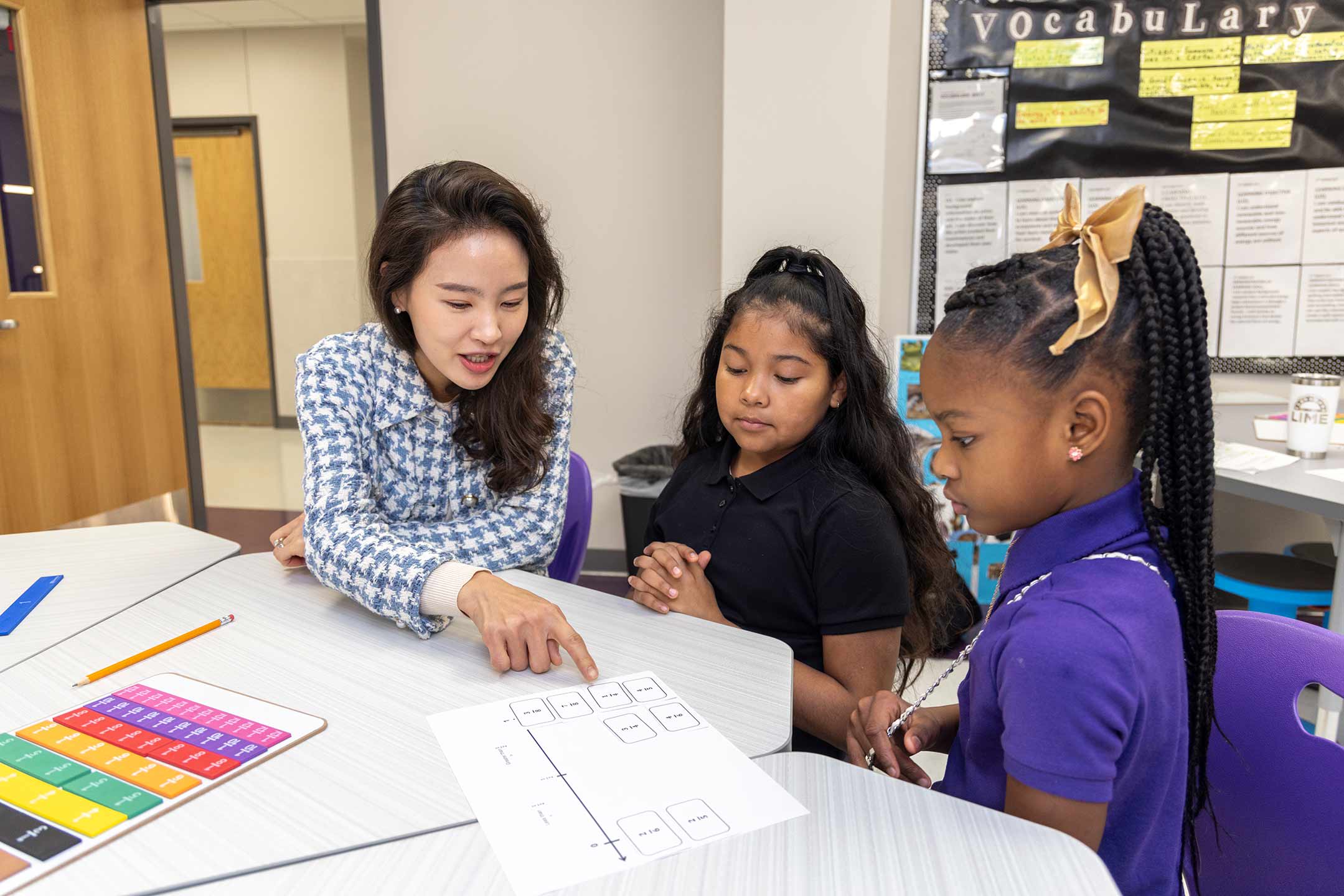
Rural school educators and after-school providers often have limited access to training and coaching. This program provides online training and ongoing coaching to educators and providers.
Rural school educators and after-school providers often have limited access to training and coaching. This program provides online training and ongoing coaching to educators and providers.
Fractions: foundation for math success
As principal investigator for a collaborative effort called SCALE, Ketterlin-Geller will work with partners at six universities to examine how a fraction intervention program called “Fraction Face-Off!” can be used in rural schools and in community-based afterschool settings. Fraction Face-Off! was developed by researchers at Vanderbilt University. Students work in small groups with their educator or tutor to learn about fractions during 36 sessions.
“Understanding proportions, ratios, algebra and higher levels of math begins with an understanding of fractions,” Ketterlin-Geller said. “Just memorizing procedures is not enough, students need to understand the ‘why’ of fractions.”
Before beginning the new SCALE project, Ketterlin-Geller and partner researchers worked with Fraction Face-Off! in a variety of settings. They found that students who completed the program showed measurable improvement in their understanding of fractions. The new project expands the intervention to include more students and educators in additional settings.
“Our students don’t have time for interventions that don’t have evidence behind them,” she said. “We can’t waste a single school year, month or week of instructional time on practices unless they show measurable results for improved learning.”
SMU professor awarded grant to help students improve fractions.

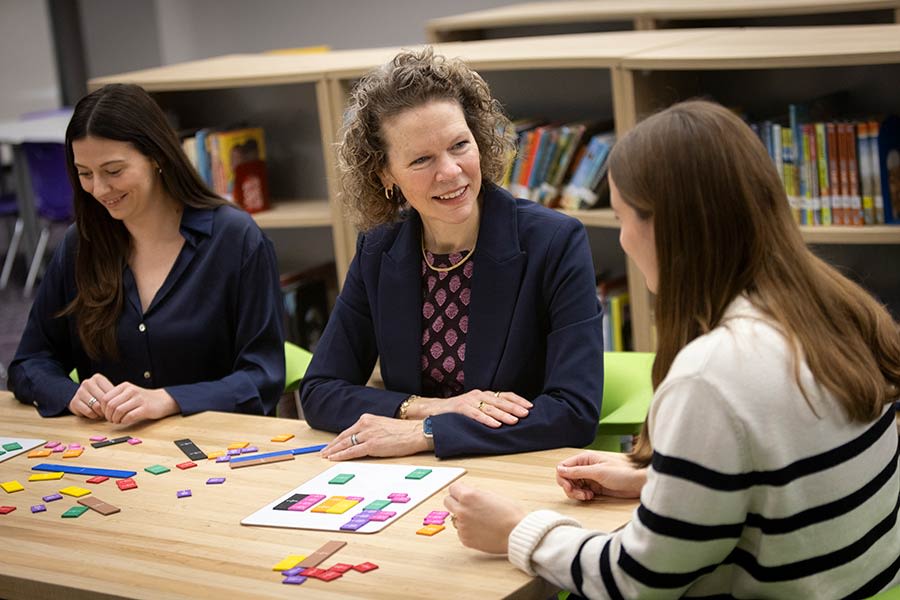
Researchers are examining how a fraction intervention program can be used in rural settings and after-school programs. An understanding of fractions is key to understanding proportions, ratios, algebra and higher levels of math.
Researchers are examining how a fraction intervention program can be used in rural settings and after-school programs. An understanding of fractions is key to understanding proportions, ratios, algebra and higher levels of math.
Educating community-based providers
Rural school educators and community-based providers often have limited access to effective interventions and professional training, Ketterlin-Geller said. The program provides them with online training and ongoing coaching.
“Educator training and coaching is a key part of the program’s effectiveness,” Ketterlin-Geller said.
Lois Ndungu, Ph.D. student researcher and former high school math teacher, said she has enjoyed helping support instructors through interventions.
“We work alongside teachers as a partnership,” Ndungu said. “We come in with additional perspective and support, including access to resources, and they come in with their own knowledge and understanding of the students in their class. I enjoy seeing the visible impact every time I coach teachers.”
SMU will lead the SCALE project with implementation partners including the University of Missouri and The University of Texas at Austin. Collaboration partners include the University of Virginia, the University of Hawaii, Georgia State University and the University of California, Riverside.
“This history-making grant to develop more effective ways of supporting fraction learning is essential to the ever-growing number of students who struggle with math,” said Stephanie L. Knight, dean of the SMU Simmons School of Education and Human Development. “I appreciate that Dr. Ketterlin-Geller’s work is being rewarded and proud that her research at SMU Simmons has the potential to make a significant impact in improving the math trajectories for students across the country.”
SMU researcher Leanne Ketterlin-Geller has spent her career focused on a challenging, widespread problem: How do we help young students who have trouble learning math?
As a former high school science teacher, Ketterlin-Geller is passionate about setting students up for success. Her research is dedicated to foundational, early mathematics skills that set the groundwork for students’ future performance in high school, higher education and beyond.
Leanne Ketterlin-Geller, professor of education policy and leadership in SMU’s Simmons School of Education and Human Development and the Texas Instruments Endowed Chair in Education. An internationally recognized math and special education researcher, Ketterlin-Geller also leads Simmons’ Research in Mathematics Education program.
Leanne Ketterlin-Geller, professor of education policy and leadership in SMU’s Simmons School of Education and Human Development and the Texas Instruments Endowed Chair in Education. An internationally recognized math and special education researcher, Ketterlin-Geller also leads Simmons’ Research in Mathematics Education program.
“A limited understanding of fractions is a major problem in schools because fractions are the gatekeeper for future success in algebra,” said Ketterlin-Geller, Texas Instruments Endowed Chair in Education and professor of education policy and leadership in the SMU Simmons School of Education and Human Development. “We’re working diligently to support kindergarten through eighth grade students as well as teachers and schools to help improve students’ math scores.”
Recent national and international test scores point to a significant drop in students’ outcomes in mathematics. To address this, Ketterlin-Geller was recently awarded a $14 million grant from the U.S. Department of Education to nationally scale a math intervention designed to help students improve their fraction skills. The grant is the highest single award total ever at SMU, a private university in the heart of Dallas that recently achieved Carnegie Research One (R1) status, a prestigious designation that indicates high research activity.
“Mathematics is cumulative, so the skills that students learn in kindergarten and first grade are still with them as they move through elementary school, middle school and high school,” she said. “Foundational early skills really set the groundwork for all future mathematics performance.”
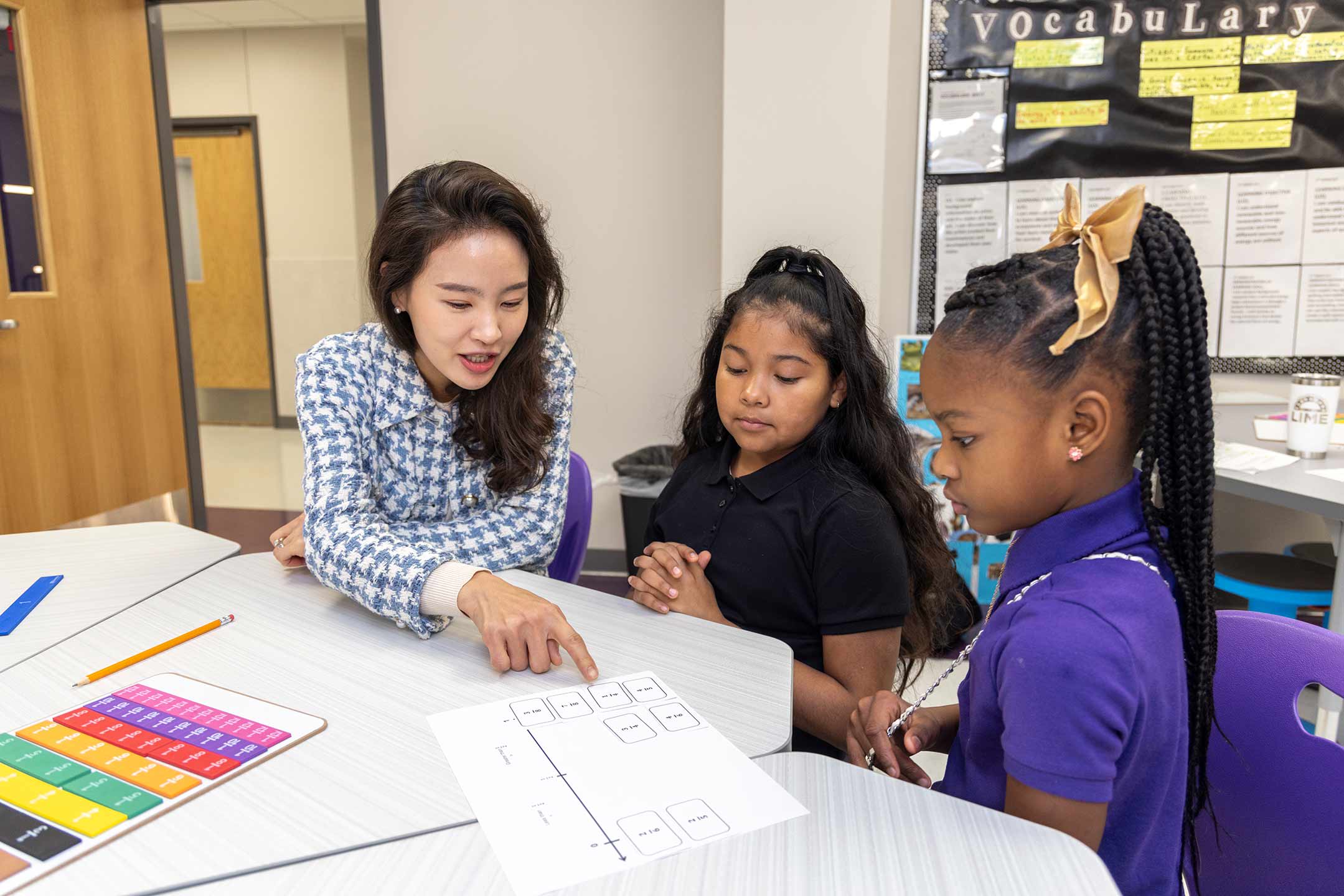
Rural school educators and after-school providers often have limited access to training and coaching. This program provides online training and ongoing coaching to educators and providers.
Rural school educators and after-school providers often have limited access to training and coaching. This program provides online training and ongoing coaching to educators and providers.
Fractions: foundation for math success
As principal investigator for a collaborative effort called SCALE, Ketterlin-Geller will work with partners at six universities to examine how a fraction intervention program called “Fraction Face-Off!” can be used in rural schools and in community-based afterschool settings. Fraction Face-Off! was developed by researchers at Vanderbilt University. Students work in small groups with their educator or tutor to learn about fractions during 36 sessions.
“Understanding proportions, ratios, algebra and higher levels of math begins with an understanding of fractions,” Ketterlin-Geller said. “Just memorizing procedures is not enough, students need to understand the ‘why’ of fractions.”
Before beginning the new SCALE project, Ketterlin-Geller and partner researchers worked with Fraction Face-Off! in a variety of settings. They found that students who completed the program showed measurable improvement in their understanding of fractions. The new project expands the intervention to include more students and educators in additional settings.
“Our students don’t have time for interventions that don’t have evidence behind them,” she said. “We can’t waste a single school year, month or week of instructional time on practices unless they show measurable results for improved learning.”
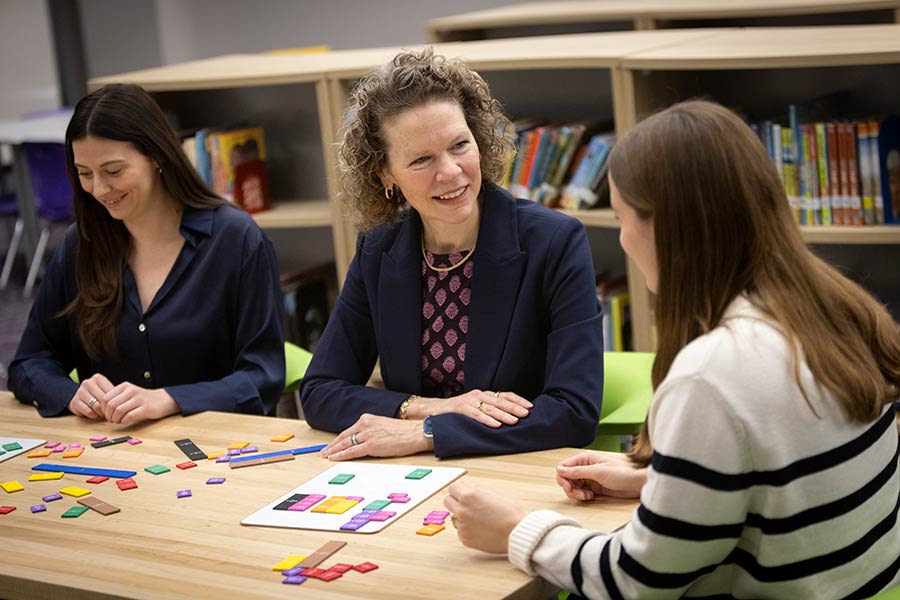
Researchers are examining how a fraction intervention program can be used in rural settings and after-school programs. An understanding of fractions is key to understanding proportions, ratios, algebra and higher levels of math.
Researchers are examining how a fraction intervention program can be used in rural settings and after-school programs. An understanding of fractions is key to understanding proportions, ratios, algebra and higher levels of math.
Educating community-based providers
Rural school educators and community-based providers often have limited access to effective interventions and professional training, Ketterlin-Geller said. The program provides them with online training and ongoing coaching.
“Educator training and coaching is a key part of the program’s effectiveness,” Ketterlin-Geller said.
Lois Ndungu, Ph.D. student researcher and former high school math teacher, said she has enjoyed helping support instructors through interventions.
“We work alongside teachers as a partnership,” Ndungu said. “We come in with additional perspective and support, including access to resources, and they come in with their own knowledge and understanding of the students in their class. I enjoy seeing the visible impact every time I coach teachers.”
SMU will lead the SCALE project with implementation partners including the University of Missouri and The University of Texas at Austin. Collaboration partners include the University of Virginia, the University of Hawaii, Georgia State University and the University of California, Riverside.
“This history-making grant to develop more effective ways of supporting fraction learning is essential to the ever-growing number of students who struggle with math,” said Stephanie L. Knight, dean of the SMU Simmons School of Education and Human Development. “I appreciate that Dr. Ketterlin-Geller’s work is being rewarded and proud that her research at SMU Simmons has the potential to make a significant impact in improving the math trajectories for students across the country.”
This custom content is sponsored by SMU and developed by Inside Higher Ed's sponsored content team. The editorial staff of Inside Higher Ed had no role in its creation.


 Built with Shorthand