

3 Ways Co-op Will Save Higher Ed
The University of Cincinnati’s co-op program links learning to careers by preparing future talent for the workforce.


3 Ways Co-op Will Save Higher Ed
The University of Cincinnati’s co-op program links learning to careers by preparing future talent for the workforce.
Every semester, UC students go to work — at Nike, at Google, at NASA, at any one of the university’s employer partners.
Those cooperative education (co-op) students not only earn $11,220 per semester on average, they graduate with 12.2% lower student loan debt compared to peers at other schools. Almost all of them (98%) continue their education or secure employment after graduation.
Co-op was invented at UC. In 1906, Dean of Engineering Herman Schneider began requiring students to alternate between taking classes and working in the field. He would later become president of the university. His model set the standard for cooperative education.
Today, UC sets the national benchmark for higher education with its co-op model. It also inspired organizations to rethink job design and future workforce development.
In this article, we take a closer look at the three foundational aspects of co-op’s impact at UC.
The Student: Offsetting Tuition Costs and Gaining Competitive Edge
Co-op is an academic program that allows students to gain professional work experience while still in college. It combines classroom experience with paid, major-related work.
“Co-ops are transformative for the development of our students, who apply what they have learned in the classroom to real-world experiences,” says UC President Neville G. Pinto, PhD. “Earning while learning goes a long way toward easing the financial burden on students and families.”
In 2024-25, more than 8,300 students earned an estimated $94.1 million through paid co-op experiences, according to self-reported data — $11,220 per student per semester, on average.

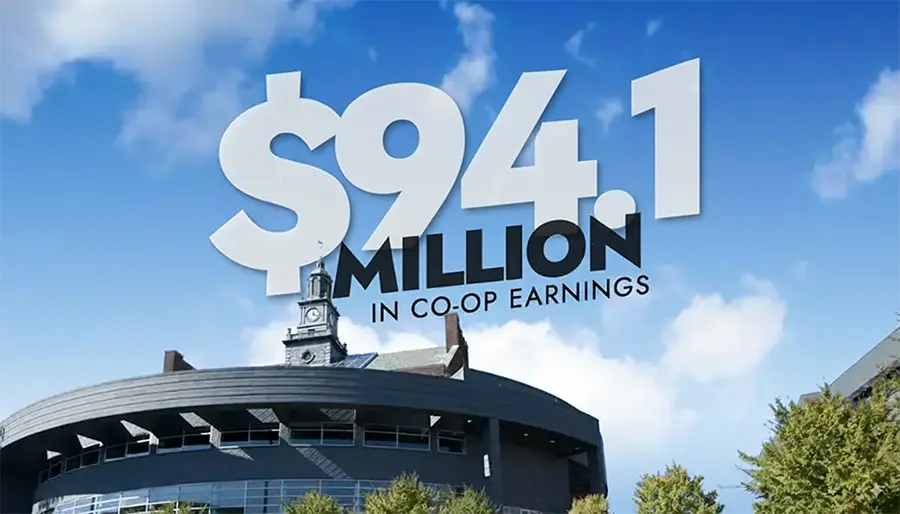
Earning money through paid co-ops helps students graduate with 12% less debt. This lasting benefit supports their post-graduation success. Students obtain job security and enjoy the benefits of the increased value of their degree.
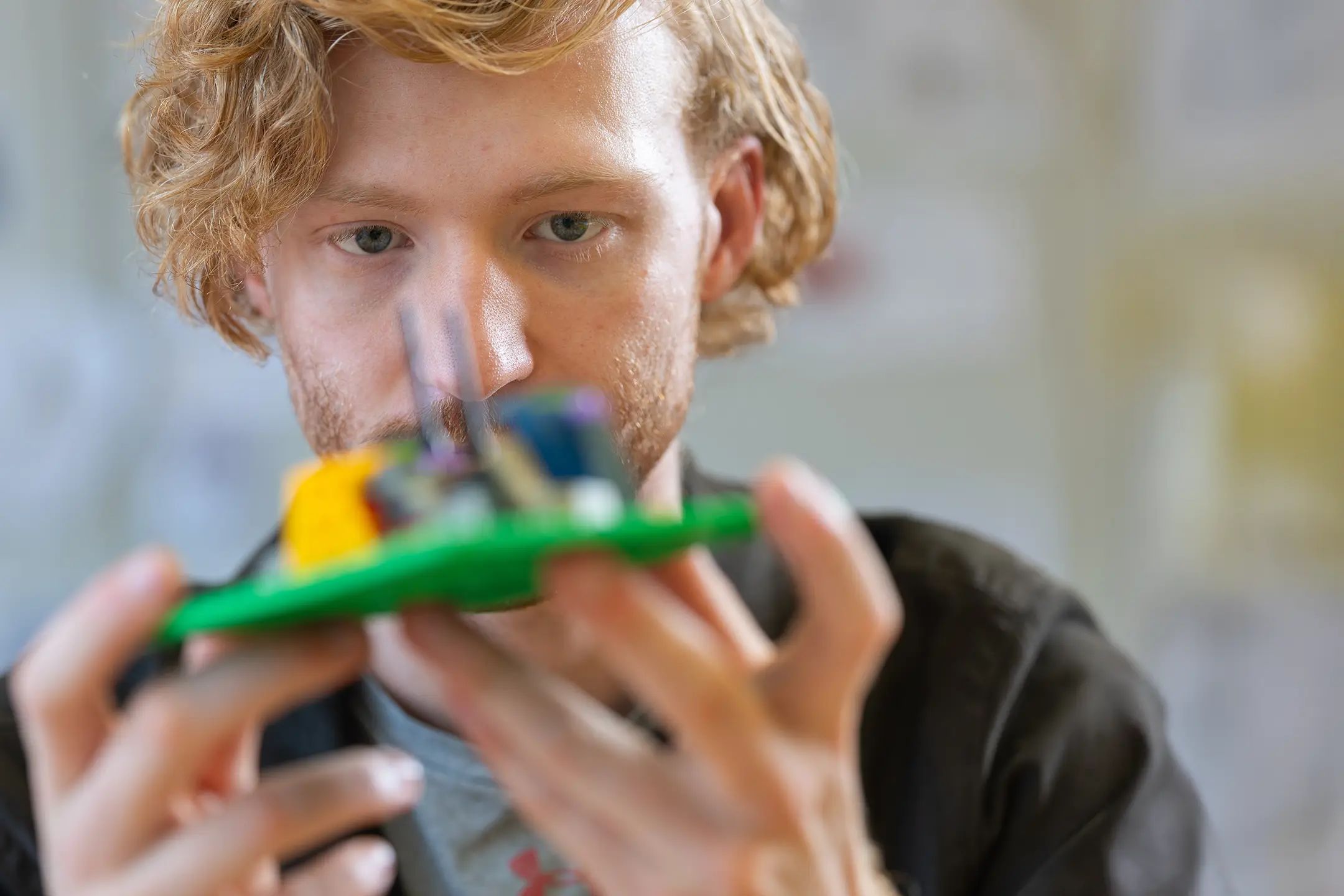
Students who complete co-op experiences graduate with a competitive edge on the global stage. In spring 2025, UC industrial design student Adam Wolshire worked as a Play Discovery Intern at Lego in Denmark. He also excelled in previous co-ops at ionVentus in Ohio and Made de Madera in Spain. In addition to being able to flex and deepen his skills, this experience helped him build skills and collaborate with peers from varied disciplines.
“One thing I really like about the Lego internship program is that they put us with designers and other interns from all over the world,” he says.

The Employer: Developing and Retaining Top Talent
For employers, co-op is a valuable recruitment tool. It’s why UC boasts corporate co-op partners like GE Aerospace, Procter & Gamble, Intel, Coca-Cola, Toyota, Meta, and more among our network of employers.
Many co-op students go on to work full time at their co-op employers after graduation, often with offers waiting for them before they don the cap and gown. And a few co-op students have gone full circle to work with UC as co-op employers.


As a UC engineering student in the ’90s, Jeremy Jarrett worked for a local technology consulting company through co-op. That company, Kinetic Vision, was at the forefront of predicting structural performance for everything from aircraft wings to machines that make diapers. Jarrett ran modeling simulations for national clients that are household names. He was one of seven employees.
Jarrett still works at Kinetic Vision today, which now employs 200 people — only now he is president and CEO.
“I guess you could say my first co-op job got me to where I am as president,” he says.


The Institution: Setting Students Up for Success
Supporting students’ career exploration requires strategic investment, including infrastructure and accessible support systems.
“The more you can incorporate co-op programming in your academic infrastructure, the better,” says Michelle Clare, Dean of UC’s College of Cooperative Education and Professional Studies. “We’ve been able to do it at scale at UC to ensure students have access.”
In addition to the infrastructure, there’s also the culture of transparency, continuous improvement, and growth mindset.
“Experiential learning was born out the educational philosophy that students get a better grasp of their disciplinary content when they are able to apply it in context, which helps when reminding faculty and staff across all disciplines of the outcomes that really matter,” says Clare.
At UC, we continue to innovate all aspects of experience-based learning. Our experience-based learning includes not only co-ops, but virtual co-ops, internships, service projects, and industry partnerships. This dedication to innovation is embedded in our student experience through the Bearcat Promise, UC's commitment to provide the people, tools, and experiences that empower student success. Because of the Bearcat Promise, students graduate with a degree in one hand and a job offer in the other.

UC’s Co-op Program
By the Numbers:
- #4 in the U.S. for co-ops & Internships (U.S. News & World Report)
- 8,300 students from disciplines across the university participated in a co-op (2024-25)
- $94.1 million in collective self-reported earnings (2024-25)
- $11,220 earned on average per student per semester (2024-25)
- 98% of co-op students have an outcome of continuing education or employment after graduation (2023-24)
What’s Next is Up to Us
When we reframe our work — not just to transform learners’ lives but to serve as the vital talent pipeline for the global economy — we unlock a greater purpose and broader impact. The interconnectedness of student experiences, workforce needs, and university infrastructure ensures that cooperative education creates a powerful, compounding effect — benefiting students, families, and the global economy.
Next Lives at the University of Cincinnati
Founded in 1819, the University of Cincinnati ranks among the nation’s best urban public research universities. Home to more than 53,600 students, 12,000 faculty and staff, and over 360,000 living alumni, UC, a Carnegie 1 institution, combines research prowess with a physical setting The New York Times has called “the most ambitious campus design program in the country." UC's momentum has never been stronger as the anchor of the Cincinnati Innovation District, the oldest cooperative education (co-op) program in the country with students earning $94 million annually through paid experiences, an academic health system, and as a member of the Big 12 Conference. The university contributes $10.6 billion in economic impact to the city and $22.7 billion to the state of Ohio. At UC, next is all of us. Learn more at uc.edu.
This custom content is sponsored by the University of Cincinnati and developed by Inside Higher Ed's sponsored content team. The editorial staff of Inside Higher Ed had no role in its creation.


 Built with Shorthand