
Co-op Will Save Higher Ed
3 Critical Mindset Shifts to Future-Proof Your University

Higher education isn’t just experiencing the existential crisis of the decade. We’re in a freefall. A terrifying plunge into the unknown. We’re gripped by the tensions at play in our institutions, such as budgetary strain, recruiting students as we endure an enrollment cliff, and mixed — at best — public perception of higher ed that is informing policy.
We’re deploying parachute after parachute to stay relevant, and we’re still falling.
The University of Cincinnati's nationally ranked co-op program is the oldest and one of the largest in the United States. Our co-op student outcomes are the precursor for the impact students will make on a global scale after they cross the stage at graduation. It’s the Bearcat Promise: UC’s commitment for students to graduate with a degree in one hand and a job offer in the other.
Why Co-op Matters Now More Than Ever
Proven Outcomes: 98% of UC co-op students secure employment or graduate school admission within six months of graduation.
Economic Impact: In 2023-24, over 8,300 students earned nearly $89 million through paid co-ops, averaging $10,700 per student per semester.
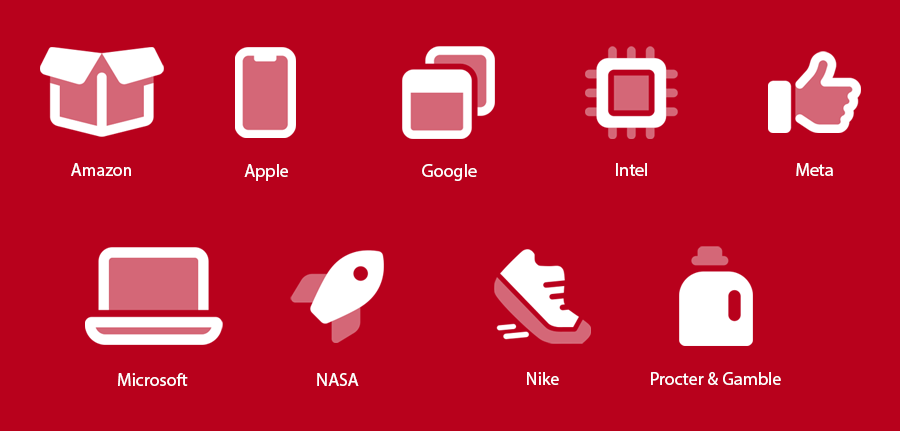
Industry Connections: UC boasts collaborations with Fortune 500 companies like GE, Disney, Toyota, and P&G, building a robust and diverse talent network.
As university leaders and administrators, your institution’s rankings, reputation, and student outcomes depend on innovative strategies. Co-op transforms your institution into a catalyst for workforce readiness while enhancing ranking metrics like employment outcomes, student engagement, and experiential learning credits.
When we, as an industry, reframe the work we do to not only transform learners’ lives but also serve as the essential talent pipeline for the global economy, we can restore faith and relevance in higher education.
Below we outline three mindset shifts for how higher ed can break our freefall and help us land in a better place.
1. Focus on the Outcomes Beyond the Degree
Let’s face it: college is about so much more than the degree.
Your university’s admissions materials even say so. It’s about the experience, the friendships, the opportunities for exploration and growth. But what about the outcomes that demonstrate educational return on investment?
It’s time to shift our focus beyond the educational experience to tangible results. Ask yourself:
- How do students benefit from blending work and study? From capturing post-work experience reflections to actual earnings, uncover the impact of co-op on students.
- What does job placement look like? What’s the actual job placement rate at graduation or six months later?
- How do our students measure up in the employment marketplace? Are your graduates climbing the corporate ladder? Are they landing promotions and salary increases that demonstrate continued success of the work experience they cultivated in school?
Capturing these metrics isn’t just a box to check. It requires the investment in people and systems and, most importantly, a culture of data analysis and socialization. Data becomes a narrative that drives momentum and accountability.


2. Prioritize Employer Relationships to Build a Strong Network
How many “front doors” does your institution have?
From an employer's perspective, connections with multiple departments can feel like navigating a maze. Inconsistencies lead to frustration and missed opportunities.
- Streamline processes: This will help strengthen relationships, taking a holistic approach to nurturing employer relationships.
- Engage: Host regular advisory boards, listening sessions, and genuine touchpoints to signal that you’re actively listening.
- Invest in these relationships: It pays off. A successful co-op program is about the company, or companies, you keep. Positive interactions breed trust and collaboration. When challenges arise — and they always do — the goodwill you’ve cultivated will spark constructive dialogue and innovative solutions.


3. Innovate and Then Scale What Works
Do course learning objectives align with the latest calls to action from job outlook surveys? Are the more structured, rigid approaches to cooperative education limiting what’s possible?
- Buck tradition: Rules are meant to be broken. Encourage faculty and staff to expand their view of what paid professional work experiences look like for both the student and the employer.
- Infuse work into the curriculum: Challenge assumptions. You don’t know what’s possible until you experiment, gather feedback, and continually improve.
- Invest and plan: If you can’t overhaul everything overnight, in a semester break, or even within one academic year, that’s okay! Start small. What improvements can you phase in? What wins can you celebrate? What funding opportunities could you consider or create with university partners to keep your institution relevant and enhance career outcomes?
Higher ed’s freefall into an uncertain future doesn’t have to end with a crash. Let's join efforts to position higher education as an essential part of the talent pipeline and save our industry.
UC’s Co-op Program
By the Numbers:
- 8,300 students from disciplines across the university participated in a co-op (2023-24)
- $88.8 million in collective self-reported earnings (2023-24)
- $10,700 earned on average per student per semester (2023-24)
- 98% of co-op students have an outcome of continuing education or employment after graduation
The University of Cincinnati:
Founder of Co-op, Leader in Co-op
At the University of Cincinnati, we believe that learning is doing and doing is learning. It’s in our DNA.
Cooperative education was invented at UC. In 1906, Dean of Engineering Herman Schneider began requiring students to alternate between taking classes and working in the field. He would later become president of the university, with his co-op concept serving as a universal model.
Today, UC boasts one of the largest co-op programs in the U.S., with a unique interdisciplinary integration into curriculum and flexible approach. Our classroom extends to nearly every corner of the globe, including co-ops at NASA, GE Aviation, Disney, Toyota, Google, Procter & Gamble, and many more.

We continue to innovate all aspects of experience-based learning, which encompasses not only co-ops but internships, service learning, virtual co-ops, community projects, and industry partnerships. This dedication to innovation is embedded in our student experience through the Bearcat Promise. This is our commitment to students, providing them with the people, tools, and experiences to help them complete a degree and prepare for professional life after graduation.
Join the Leaders Shaping the Future
of Higher Education
UC’s co-op program — the nation’s oldest and one of the largest — exemplifies how strategic focus on experiential learning can redefine institutional success. With a rich history of innovation and a forward-looking approach, UC is committed to transforming students into confident, employable professionals.
Ready to elevate your institution’s rankings and impact?
Next Lives at the University of Cincinnati
Founded in 1819, the University of Cincinnati ranks among the nation’s best urban public research universities. Home to more than 53,000 students, 12,000 faculty and staff, and over 350,000 living alumni, UC, a Carnegie 1 institution, combines research prowess with a physical setting The New York Times has called “the most ambitious campus design program in the country." UC's momentum has never been stronger as the anchor of the Cincinnati Innovation District, the oldest cooperative education (co-op) program in the country with students earning $88.8 million annually through paid experiences, an academic health system, and as a member of the Big 12 Conference. The university contributes $10.6 billion in economic impact to the city and $22.7 billion to the state of Ohio.
This custom content is sponsored by the University of Cincinnati and developed by Inside Higher Ed's sponsored content team. The editorial staff of Inside Higher Ed had no role in its creation.

 Built with Shorthand