

How the University of Florida is leading education in AI
From ethics instruction to discipline-specific coursework, the University of Florida’s approach to AI education is scaling across colleges and influencing universities nationwide.


As artificial intelligence (AI) rapidly reshapes the modern workforce, universities face growing pressure to ensure their graduates are prepared to succeed by using AI effectively and ethically. The University of Florida (UF) has been both prescient and swift in its response to this challenge. In 2022, following more than a decade of AI infrastructure investment, UF established centralized leadership of AI academic efforts by establishing its Artificial Intelligence Academic Initiative Center, known as the AI2 Center.
The AI2 Center provides a coordinated and systematized approach to the development of AI coursework which, through UF’s AI Across the Curriculum initiative, is available to students throughout the institution, with discipline-specific offerings in each of its 16 colleges. In addition to this, the center identifies opportunities for faculty and students to engage with AI, partners with the university’s Career Connections Center, and oversees UF’s 2024-2029 Quality Enhancement Plan, the key element of UF’s accreditation.
When it comes to its leadership in AI integration, the university’s ethos is one of openness. The AI2 Center manages the AI Learning Academy, which offers professional development courses for higher education faculty and administrators from within and outside of UF. It also organizes multiple seminars and conferences, attracting participants from throughout the U.S. and around the world.

Guiding other institutions in AI integration
Over the years, an increasing number of universities have partnered with UF leadership seeking new ways to expand their AI offerings to students beyond technical fields. The Ohio State University is one of them.
“One aspect that particularly resonated with us was the structure of UF’s undergraduate AI certificate: a shared foundation in artificial intelligence fundamentals, a dedicated course on ethics, and a discipline-specific course tailored to each college,” said Dr. Krishna Chaitanya Rao Kathala, program director of the Translational Data Analytics Institute at the Ohio State University. “This design ensures students build common AI literacy while applying it meaningfully in their own fields, whether in agriculture, business, journalism, or the social sciences."
Howard University has also contacted UF for insight on AI integration. “At Howard University, we are advancing industry-aligned AI curricula to prepare our students for an evolving workforce and emerging national priorities. In shaping this effort, we reviewed leading curricular models, including innovative approaches from the University of Florida,” said Talitha Washington, executive director of the Center for Applied Data Science and Analytics and co-chair of the AI Advisory Council at Howard University. “To develop our Fundamentals of AI certificate, we engaged faculty across the university to ensure the program serves students in every discipline. We are grateful to the University of Florida for their continued partnership as we expand AI education and strengthen the nation’s AI talent pipeline.”
UF’s AI Across the Curriculum initiative works as a blueprint for integrating AI as interest grows among students. “One of the things that helped us is that we were early,” said Dr. Hans van Oostrom, who directs the AI2 Center at UF. “When institutions began asking how to bring AI into the curriculum, we were already doing it. We had a blueprint in place,” he said.

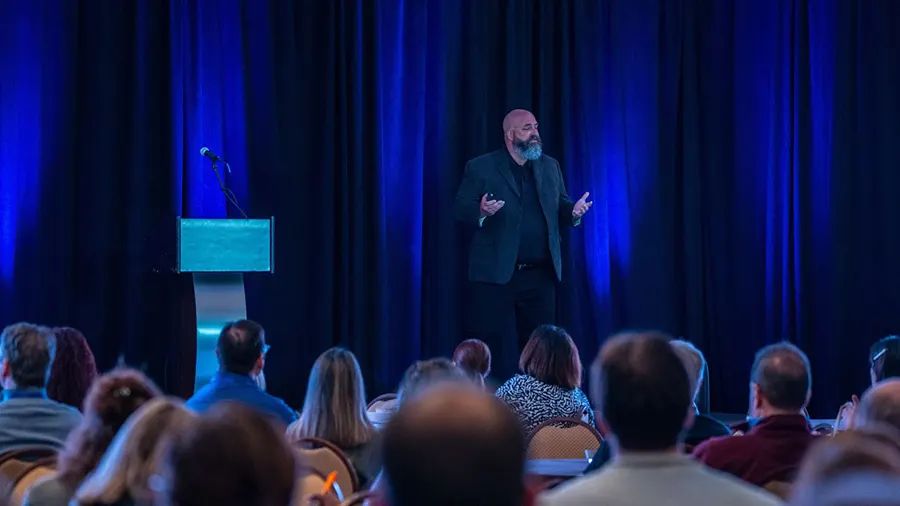
Dr. Hans van Oostrom, director of the AI² Center at UF
Dr. Hans van Oostrom, director of the AI² Center at UF
It can be tricky for institution leaders to decide which AI tools to implement for their faculty and students, but van Oostrom emphasizes that they should worry less about which systems are being used and more about how to get the most out of general AI ethics and fundamentals. "I don't think it matters that you want the best tool, because what we're doing is we're educating the foundation and ethical use, primarily," said Van Oostrom.
One of the biggest opportunities for knowledge sharing is the annual AI² Summit, a conference organized by UF to bring together academic leaders and educators from across the world who are committed to transforming AI education. Through expert-led sessions and hands-on workshops, attendees can learn a range of tools and techniques to integrate AI into their institutions.
In addition to this event, UF has made evergreen resources available on its website. Its Teaching with AI page offers materials for those who are just getting started with AI and those who are looking to expand their existing efforts. There are also several publications about the adoption and use of AI across the curriculum by UF academic leaders, faculty and communicators.
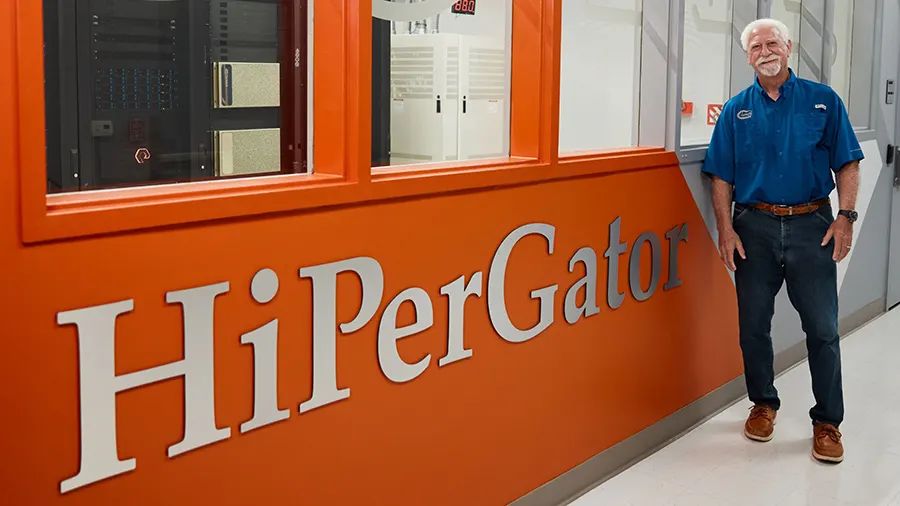
Chris Malachowsky, UF alumnus and NVIDIA co-founder, standing outside of the HiPerGator room
Chris Malachowsky, UF alumnus and NVIDIA co-founder, standing outside of the HiPerGator room
AI across disciplines
For UF, implementing AI throughout its curriculum began with making courses available throughout all of its colleges. One of the first steps for institutions is to ensure they have the capacity to embed AI in every sector.
For example, at UF’s Warrington College of Business, all undergraduate students complete a foundational AI course focused on practical tools such as Python. The college has also updated its required business statistics course to include machine learning and predictive analytics. Students seeking additional skills can pursue an undergraduate AI certificate, which includes coursework in AI ethics and a discipline-specific course tailored to each college.
UF’s College of Dentistry encourages students to use AI-assisted radiographic tools that highlight potential cavities on X-rays, which helps them learn how to interpret AI-generated results and verify them with clinical judgement. At UF’s College of Nursing, faculty have developed AI-powered simulations that allow students to practice challenging conversations with patient avatars while receiving feedback on communication and empathy.
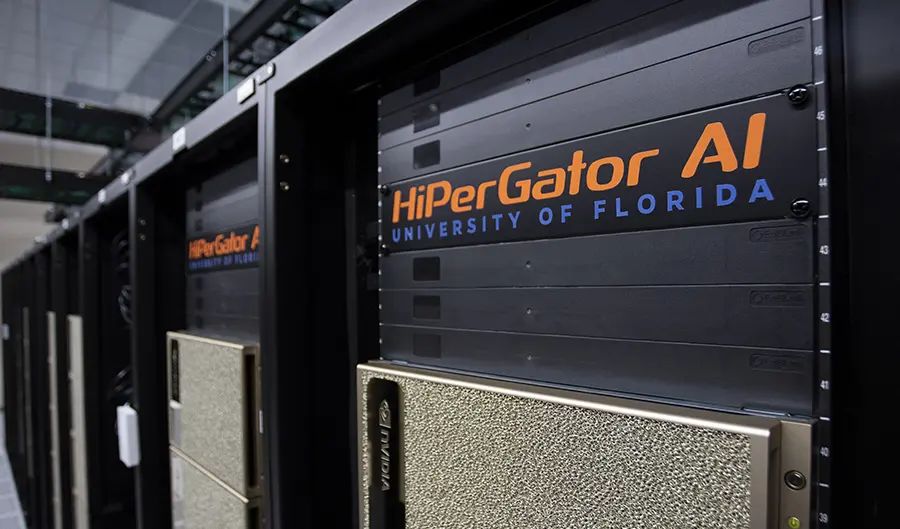
UF has also recently introduced undergraduate fellowships in AI designed to deepen students’ early exposure. Fellows are automatically enrolled in the AI certificate program and gain access to seminars taught by leading AI thinkers. The fellowships also offer valuable project time with access to HiPerGator, the fastest supercomputer in North American higher education.

Preparing K-12 educators
UF is also training educators to utilize AI in K-12 classrooms. Through the CS Everyone Center in the College of Education, the university provides training for teachers nationwide and offers an online AI microcredential. The center also leads the Florida K-12 AI Education Task Force, which works with districts representing more than 70 percent of students in Florida.
Through these initiatives, future educators learn how to use AI to design assignments, support analytical skills and reinforce writing instruction. This approach emphasizes broad exposure to AI tools and concepts across disciplines, supported by faculty expertise and campus resources.
Focusing on intentional, supported exposure, rather than isolated expertise, has become a defining feature of how AI is taught at UF. This model has become successful in bringing in more than 300 AI-focused faculty across the university and has resulted in about 14,000 students enrolled in AI courses every year. As UF continues to grow and define its expertise in this area, it will also continue to share its knowledge with other institutions so they can do the same.
Learn more about UF’s
AI Across the Curriculum initiative.
This custom content is sponsored by the University of Florida and developed by Inside Higher Ed's sponsored content team. The editorial staff of Inside Higher Ed had no role in its creation.


All photos credit: The University of Florida
How the University of Florida is leading education in AI

As artificial intelligence (AI) rapidly reshapes the modern workforce, universities face growing pressure to ensure their graduates are prepared to succeed by using AI effectively and ethically. The University of Florida (UF) has been both prescient and swift in its response to this challenge. In 2022, following more than a decade of AI infrastructure investment, UF established centralized leadership of AI academic efforts by establishing its Artificial Intelligence Academic Initiative Center, known as the AI2 Center.
The AI2 Center provides a coordinated and systematized approach to the development of AI coursework which, through UF’s AI Across the Curriculum initiative, is available to students throughout the institution, with discipline-specific offerings in each of its 16 colleges. In addition to this, the center identifies opportunities for faculty and students to engage with AI, partners with the university’s Career Connections Center, and oversees UF’s 2024-2029 Quality Enhancement Plan, the key element of UF’s accreditation.
When it comes to its leadership in AI integration, the university’s ethos is one of openness. The AI2 Center manages the AI Learning Academy, which offers professional development courses for higher education faculty and administrators from within and outside of UF. It also organizes multiple seminars and conferences, attracting participants from throughout the U.S. and around the world.
Guiding other institutions in AI integration
Over the years, an increasing number of universities have partnered with UF leadership seeking new ways to expand their AI offerings to students beyond technical fields. The Ohio State University is one of them.
“One aspect that particularly resonated with us was the structure of UF’s undergraduate AI certificate: a shared foundation in artificial intelligence fundamentals, a dedicated course on ethics, and a discipline-specific course tailored to each college,” said Dr. Krishna Chaitanya Rao Kathala, program director of the Translational Data Analytics Institute at the Ohio State University. “This design ensures students build common AI literacy while applying it meaningfully in their own fields, whether in agriculture, business, journalism, or the social sciences."
Howard University has also contacted UF for insight on AI integration. “At Howard University, we are advancing industry-aligned AI curricula to prepare our students for an evolving workforce and emerging national priorities. In shaping this effort, we reviewed leading curricular models, including innovative approaches from the University of Florida,” said Talitha Washington, executive director of the Center for Applied Data Science and Analytics and co-chair of the AI Advisory Council at Howard University. “To develop our Fundamentals of AI certificate, we engaged faculty across the university to ensure the program serves students in every discipline. We are grateful to the University of Florida for their continued partnership as we expand AI education and strengthen the nation’s AI talent pipeline.”
UF’s AI Across the Curriculum initiative works as a blueprint for integrating AI as interest grows among students. “One of the things that helped us is that we were early,” said Dr. Hans van Oostrom, who directs the AI2 Center at UF. “When institutions began asking how to bring AI into the curriculum, we were already doing it. We had a blueprint in place,” he said.
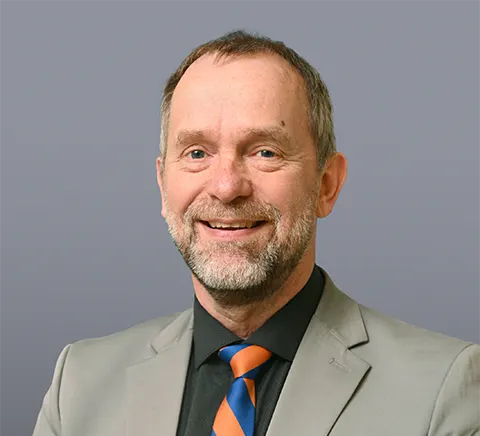
Dr. Hans van Oostrom, director of the AI² Center at UF
Dr. Hans van Oostrom, director of the AI² Center at UF
It can be tricky for institution leaders to decide which AI tools to implement for their faculty and students, but van Oostrom emphasizes that they should worry less about which systems are being used and more about how to get the most out of general AI ethics and fundamentals. "I don't think it matters that you want the best tool, because what we're doing is we're educating the foundation and ethical use, primarily," said Van Oostrom.
One of the biggest opportunities for knowledge sharing is the annual AI² Summit, a conference organized by UF to bring together academic leaders and educators from across the world who are committed to transforming AI education. Through expert-led sessions and hands-on workshops, attendees can learn a range of tools and techniques to integrate AI into their institutions.
In addition to this event, UF has made evergreen resources available on its website. Its Teaching with AI page offers materials for those who are just getting started with AI and those who are looking to expand their existing efforts. There are also several publications about the adoption and use of AI across the curriculum by UF academic leaders, faculty and communicators.
Chris Malachowsky, UF alumnus and NVIDIA co-founder, standing outside of the HiPerGator room
Chris Malachowsky, UF alumnus and NVIDIA co-founder, standing outside of the HiPerGator room
AI across disciplines
For UF, implementing AI throughout its curriculum began with making courses available throughout all of its colleges. One of the first steps for institutions is to ensure they have the capacity to embed AI in every sector.
For example, at UF’s Warrington College of Business, all undergraduate students complete a foundational AI course focused on practical tools such as Python. The college has also updated its required business statistics course to include machine learning and predictive analytics. Students seeking additional skills can pursue an undergraduate AI certificate, which includes coursework in AI ethics and a discipline-specific course tailored to each college.
UF’s College of Dentistry encourages students to use AI-assisted radiographic tools that highlight potential cavities on X-rays, which helps them learn how to interpret AI-generated results and verify them with clinical judgement. At UF’s College of Nursing, faculty have developed AI-powered simulations that allow students to practice challenging conversations with patient avatars while receiving feedback on communication and empathy.
UF has also recently introduced undergraduate fellowships in AI designed to deepen students’ early exposure. Fellows are automatically enrolled in the AI certificate program and gain access to seminars taught by leading AI thinkers. The fellowships also offer valuable project time with access to HiPerGator, the fastest supercomputer in North American higher education.
Preparing K-12 educators
UF is also training educators to utilize AI in K-12 classrooms. Through the CS Everyone Center in the College of Education, the university provides training for teachers nationwide and offers an online AI microcredential. The center also leads the Florida K-12 AI Education Task Force, which works with districts representing more than 70 percent of students in Florida.
Through these initiatives, future educators learn how to use AI to design assignments, support analytical skills and reinforce writing instruction. This approach emphasizes broad exposure to AI tools and concepts across disciplines, supported by faculty expertise and campus resources.
Focusing on intentional, supported exposure, rather than isolated expertise, has become a defining feature of how AI is taught at UF. This model has become successful in bringing in more than 300 AI-focused faculty across the university and has resulted in about 14,000 students enrolled in AI courses every year. As UF continues to grow and define its expertise in this area, it will also continue to share its knowledge with other institutions so they can do the same.
Learn more about UF’s
AI Across the Curriculum initiative.
This custom content is sponsored by the University of Florida and developed by Inside Higher Ed's sponsored content team. The editorial staff of Inside Higher Ed had no role in its creation.
All photos credit: The University of Florida
 Built with Shorthand