

Behind the Boom
UT San Antonio’s Formula for Historic Enrollment Growth
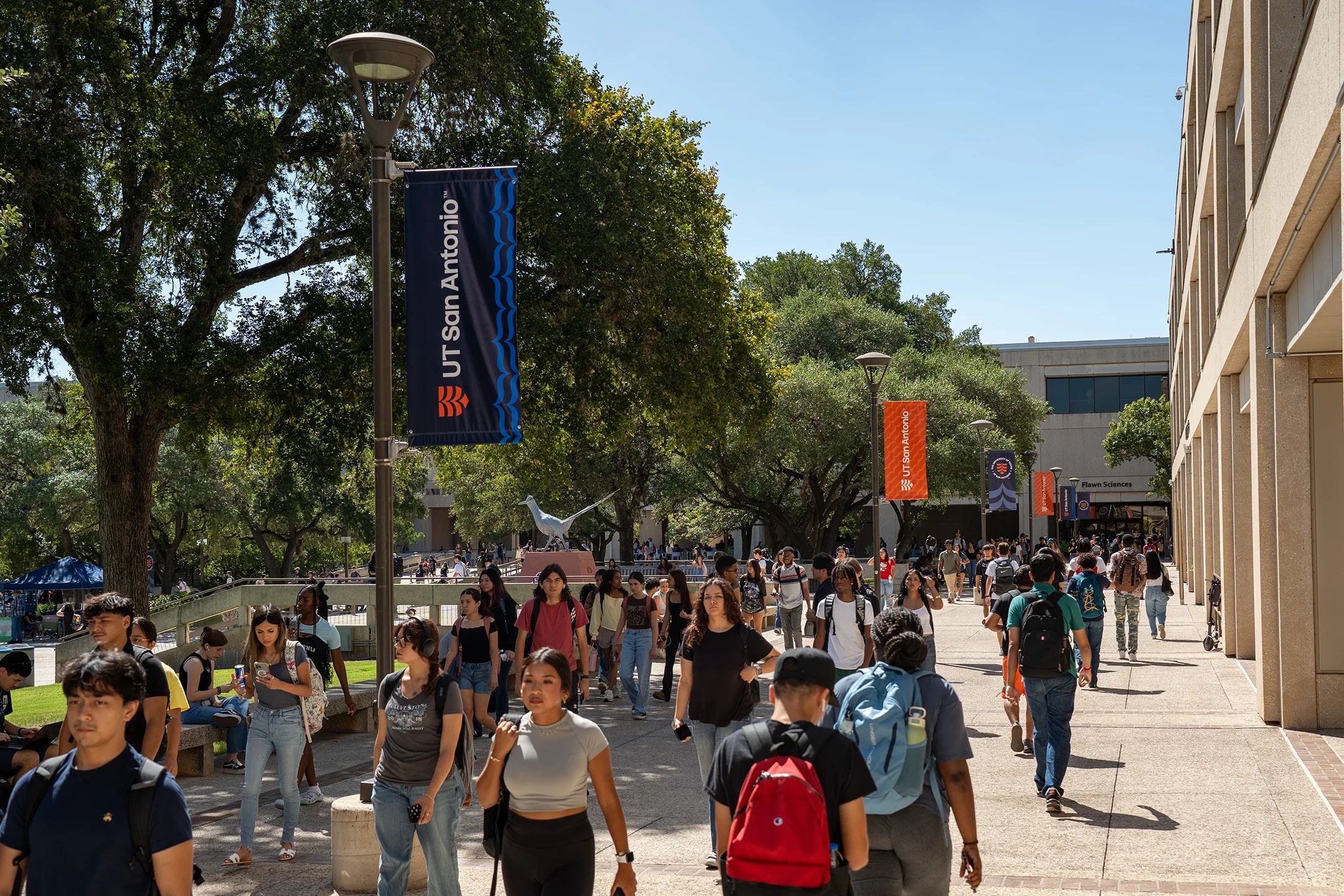

At a time when many public universities face an increasingly competitive enrollment landscape, The University of Texas at San Antonio is charting a different course.
This fall, the university surpassed 42,000 students — its largest enrollment in history — marking a 7% surge driven by the biggest freshman class on record.
This growth reflects far more than the demographic advantages of operating in one of the nation’s fastest-growing states. It is the result of a decade-long strategy grounded in a conviction that access and academic excellence are mutually reinforcing, newly amplified through its merger with The University of Texas Health Science Center at San Antonio, an academic health center encompassing six health professional schools and an integrated enterprise of education, biomedical research and patient care.
What’s behind this historic growth? Here are some strategies that led to the institution’s remarkable enrollment momentum.
Innovative programs driving enrollment and opportunity
Innovation has been a defining factor in UT San Antonio’s record-breaking enrollment growth, says Glenn Martinez, dean of the College of Liberal and Fine Arts.
The college has been a major contributor, introducing a half dozen new programs in the last two years that challenge traditional notions of liberal arts education. New programs like a BA in Digital Media Influence and a BA in Commercial and Digital Music have contributed significantly to the college’s 11% increase in enrollment from Spring 2025 to Spring 2026.
“Our students are looking for programs that provide clear pathways to employment, connect academic study with real-world experience, and offer skills that remain relevant as industries change. Our approach in program expansion directly aligns with these priorities.”
—Glenn Martinez, Dean of the College of Liberal and Fine Arts
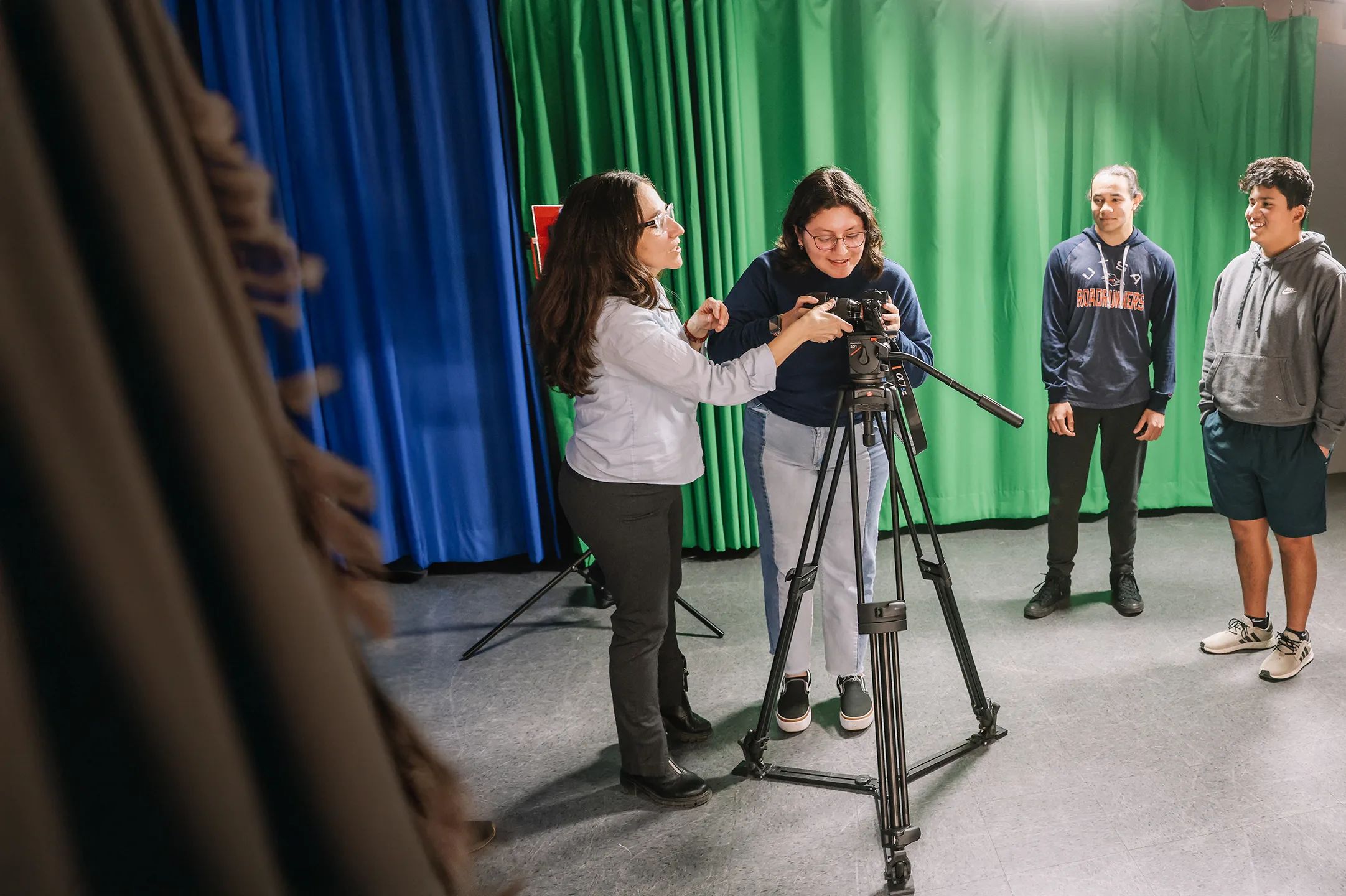
Another example is the college’s Film and Media Studies program, which began in 2022 and now numbers over 300 students. This rapid growth directly addresses the need for a skilled workforce in media production industries. That industry now is poised for significant expansion due to recent state legislation that includes a $1.5 billion investment into the state’s film incentives program over the next decade, creating immediate high-demand jobs and career pathways for graduates.
Building on its success in program innovation, the university this fall launched a new College of AI, Cyber and Computing, the first of its-kind aligning signature programs in cybersecurity, computer science, computer engineering, data science and related disciplines under one collaborative academic hub. Designed to strengthen interdisciplinary research, expand industry partnerships, and accelerate the development of career-focused academic pathways, the college’s forward-looking structure positions UT San Antonio at the forefront of emerging technology education and workforce development.
Degrees that match industry demand
Leading UT San Antonio in terms of enrollment growth is University College, where the undergraduate multidisciplinary studies (MDST) program drove a remarkable 31% enrollment surge in Fall 2025, to 1,700 students.
The MDST program functions as an academic incubator, allowing UT San Antonio to be highly responsive to both student demand and evolving industry needs. Students in the MDST program choose from a growing list of prescribed niche programs that combine coursework from multiple colleges or design their own highly customized degree plan.
This innovative approach allows students to curate their career paths while enabling the university to test and refine innovative curricula in emerging or growing fields, such as Game Design in support of Texas’ $6.5 billion video game industry. Over time, successful programs can transition into stand-alone degree programs within the university’s other academic colleges.
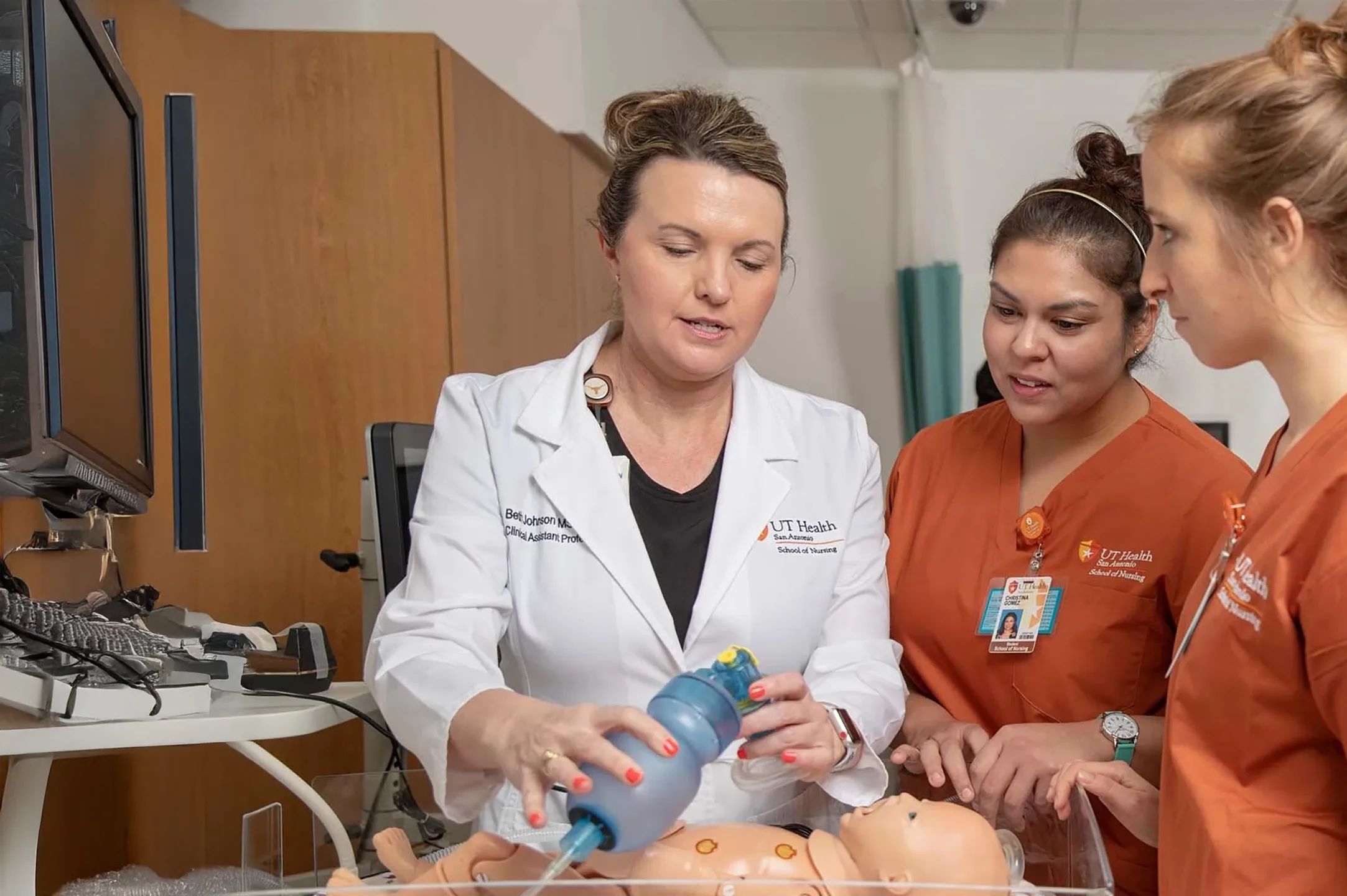
Nursing Studies is currently MDST’s largest niche program and part of a 2+2 pathway program with the university’s Health Science Center. More than 750 students are enrolled for Fall 2025, a 131% increase over last fall.
“The explosive growth in our Nursing Studies pathway perfectly illustrates the power of the recent merger between UTSA and UT Health San Antonio. The model leverages our academic foundational strengths with the expertise of the Health Science Center to meet a critical workforce need. It’s a model we intend to replicate across the university to drive even greater momentum.”
—Jianwei Niu, Dean of University College
Further demonstrating the power of cross-institutional innovation, UT San Antonio recently introduced a new dual MD/MS in Artificial Intelligence, recognized as the first of its kind in the nation. The program blends medical education with advanced AI training to prepare future physicians to lead in applying artificial intelligence to diagnostics, treatment planning, and clinical decision‑making.
“At the Long School of Medicine, we are shaping the future of medicine by integrating clinical care, scientific discovery and emerging technologies. Through the dual MD/MS in Artificial Intelligence, we are preparing our students to deliver real-world impact while advancing the future of health care.”
—Robert A. Hromas, MD, FACP, Dean, Joe R. and Teresa Lozano Long School of Medicine





Prioritizing student success
The story of UT San Antonio's enrollment growth is ultimately defined by its focus on student opportunity and success. While this year’s record student population followed a competitive recruitment cycle with more than 45,000 undergraduate applications — the highest in university history — once they arrive on campus, they are staying on track at unprecedented levels.
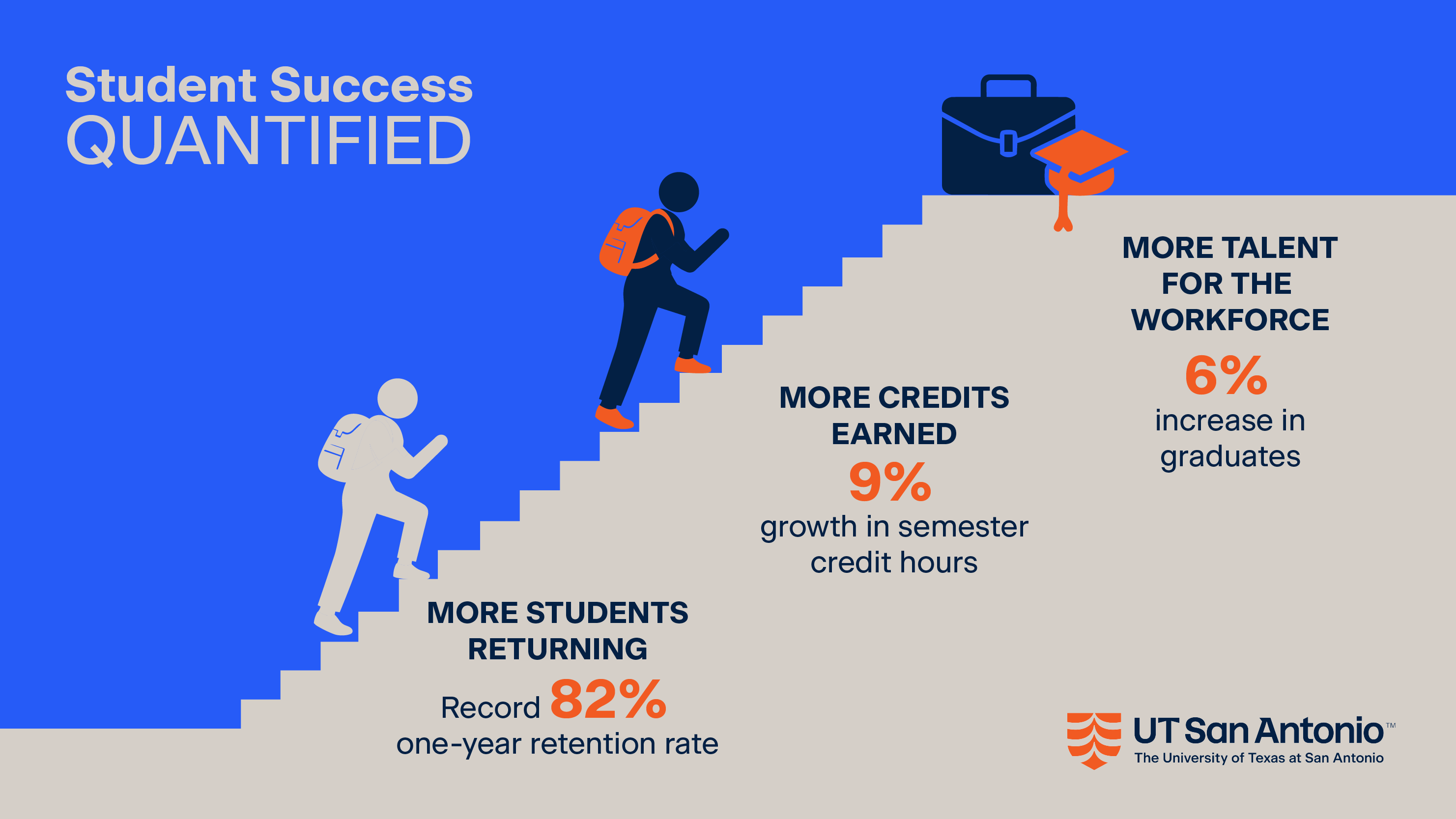
UT San Antonio’s one-year retention rate has reached an all-time high of 82%, and total semester credit hours are up 9%, reflecting deep student engagement and effective campus support. For the 2024–2025 academic year, the university’s academic colleges produced over 7,750 graduates prepared to contribute to the workforce and economy — a 6% year-over-year increase.

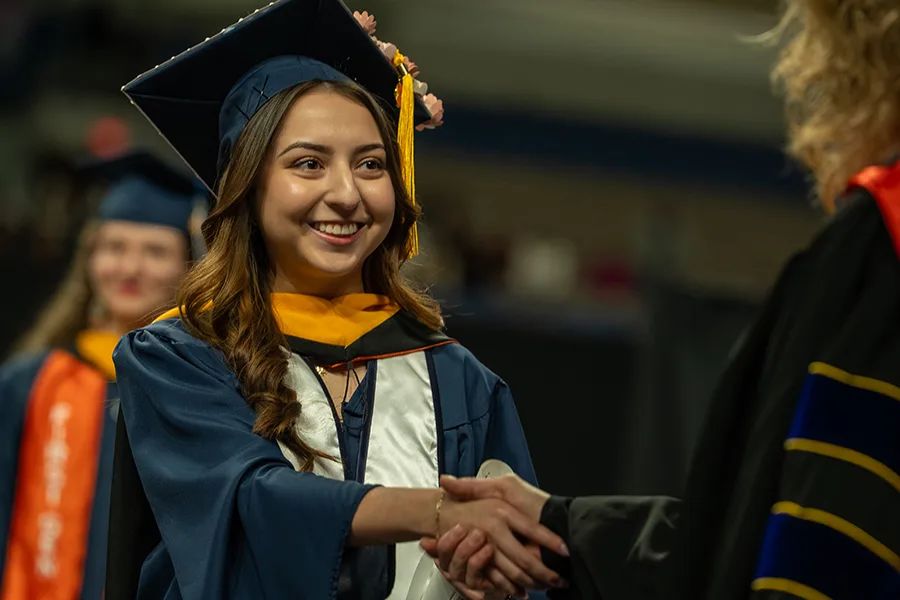
And while UT San Antonio’s reputation for success grows, the university remains dedicated to ensuring that high-quality education remains accessible and delivers strong return on investment, upward economic and social mobility, and career-ready graduates who contribute immediately to the workforce. The university’s Bold Promise tuition program, which covers 100% of tuition and fees for qualifying Texas families, is now nearing 5,000 students. UT San Antonio awarded over $20 million more in financial aid this fall, underscoring its commitment to affordability.
“Our record retention and degree completion rates reflect an academic ecosystem intentionally designed for student success. When you combine academic excellence with comprehensive support and meaningful career preparation, the result is a growing community of talented alumni ready to make a significant impact. These milestones stem from sustained investment in faculty, data-informed decision making, and a shared commitment to help every student succeed.”
—Heather Shipley, Provost and Senior Executive Vice President for Academic Affairs
The university’s commitment to student success was recently recognized on the national stage. In November, the APLU awarded UT San Antonio the inaugural Excellence in Student Success Award, honoring the university’s comprehensive, data-driven approach and highlighting it as a national model for public research universities.
The award affirms what the numbers already show: UT San Antonio is delivering student success at scale.
“The growing demand for a UT San Antonio degree is emblematic of our efforts to redefine the relationship between academic excellence and workforce preparation. Out intentional pairing of high-demand programs, hands-on research, and an unwavering commitment to student success will continue to create opportunities that change the lives of individuals, their families, and our communities at large.”
—Taylor Eighmy, President
Behind the Boom
UT San Antonio’s Formula for Historic Enrollment Growth

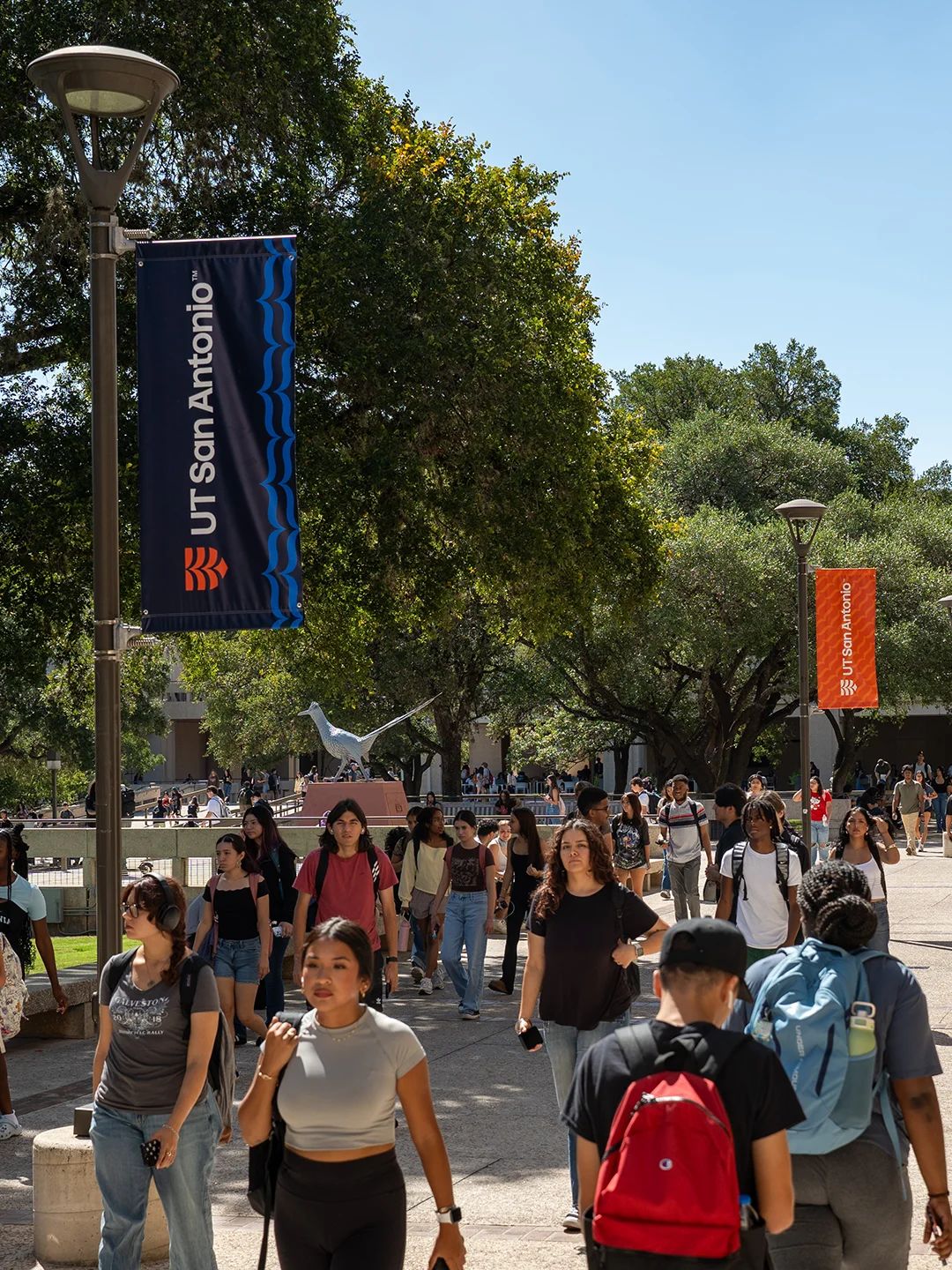
At a time when many public universities face an increasingly competitive enrollment landscape, The University of Texas at San Antonio is charting a different course.
This fall, the university surpassed 42,000 students — its largest enrollment in history — marking a 7% surge driven by the biggest freshman class on record.
This growth reflects far more than the demographic advantages of operating in one of the nation’s fastest-growing states. It is the result of a decade-long strategy grounded in a conviction that access and academic excellence are mutually reinforcing, newly amplified through its merger with The University of Texas Health Science Center at San Antonio, an academic health center encompassing six health professional schools and an integrated enterprise of education, biomedical research and patient care.
What’s behind this historic growth? Here are some strategies that led to the institution’s remarkable enrollment momentum.

Innovative programs driving enrollment and opportunity
Innovation has been a defining factor in UT San Antonio’s record-breaking enrollment growth, says Glenn Martinez, dean of the College of Liberal and Fine Arts.
The college has been a major contributor, introducing a half dozen new programs in the last two years that challenge traditional notions of liberal arts education. New programs like a BA in Digital Media Influence and a BA in Commercial and Digital Music have contributed significantly to the college’s 11% increase in enrollment from Spring 2025 to Spring 2026.
“Our students are looking for programs that provide clear pathways to employment, connect academic study with real-world experience, and offer skills that remain relevant as industries change. Our approach in program expansion directly aligns with these priorities.”
—Glenn Martinez, Dean of the College of Liberal and Fine Arts
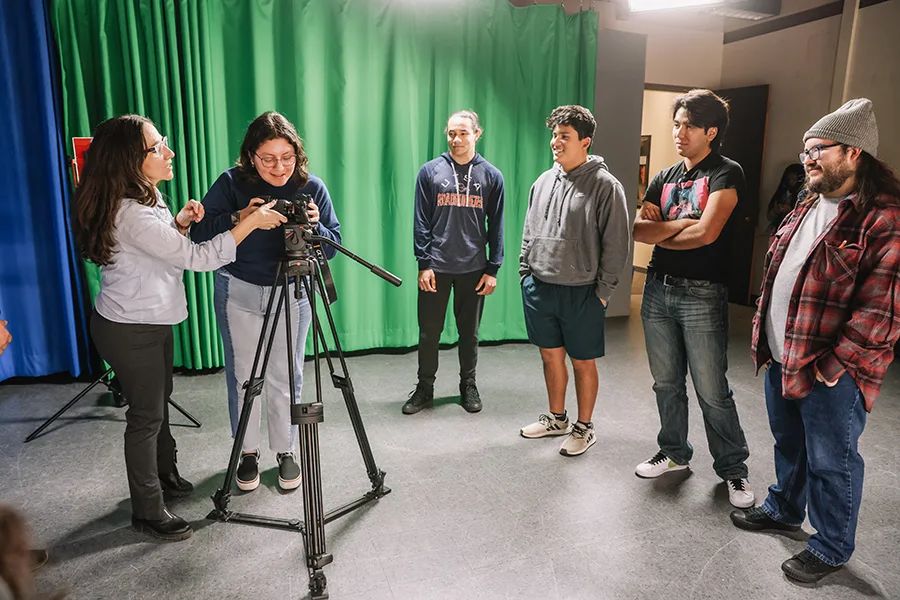
Another example is the college’s Film and Media Studies program, which began in 2022 and now numbers over 300 students. This rapid growth directly addresses the need for a skilled workforce in media production industries. That industry now is poised for significant expansion due to recent state legislation that includes a $1.5 billion investment into the state’s film incentives program over the next decade, creating immediate high-demand jobs and career pathways for graduates.
Building on its success in program innovation, the university this fall launched a new College of AI, Cyber and Computing, the first of its-kind aligning signature programs in cybersecurity, computer science, computer engineering, data science and related disciplines under one collaborative academic hub. Designed to strengthen interdisciplinary research, expand industry partnerships, and accelerate the development of career-focused academic pathways, the college’s forward-looking structure positions UT San Antonio at the forefront of emerging technology education and workforce development.

Degrees that match industry demand
Leading UT San Antonio in terms of enrollment growth is University College, where the undergraduate multidisciplinary studies (MDST) program drove a remarkable 31% enrollment surge in Fall 2025, to 1,700 students.
The MDST program functions as an academic incubator, allowing UT San Antonio to be highly responsive to both student demand and evolving industry needs. Students in the MDST program choose from a growing list of prescribed niche programs that combine coursework from multiple colleges or design their own highly customized degree plan.
This innovative approach allows students to curate their career paths while enabling the university to test and refine innovative curricula in emerging or growing fields, such as Game Design in support of Texas’ $6.5 billion video game industry. Over time, successful programs can transition into stand-alone degree programs within the university’s other academic colleges.
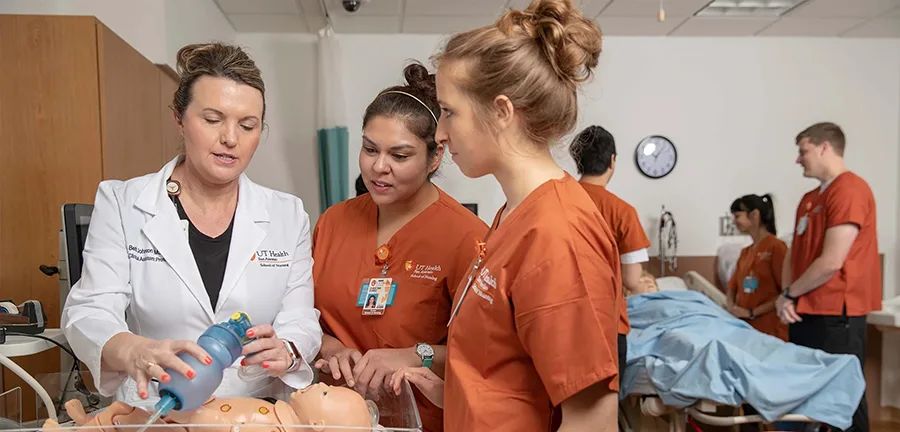
Nursing Studies is currently MDST’s largest niche program and part of a 2+2 pathway program with the university’s Health Science Center. More than 750 students are enrolled for Fall 2025, a 131% increase over last fall.
"The explosive growth in our Nursing Studies pathway perfectly illustrates the power of the recent merger between UTSA and UT Health San Antonio. The model leverages our academic foundational strengths with the expertise of the Health Science Center to meet a critical workforce need. It’s a model we intend to replicate across the university to drive even greater momentum."
—Jianwei Niu, Dean of University College
Further demonstrating the power of cross-institutional innovation, UT San Antonio recently introduced a new dual MD/MS in Artificial Intelligence, recognized as the first of its kind in the nation. The program blends medical education with advanced AI training to prepare future physicians to lead in applying artificial intelligence to diagnostics, treatment planning, and clinical decision‑making.
“At the Long School of Medicine, we are shaping the future of medicine by integrating clinical care, scientific discovery and emerging technologies. Through the dual MD/MS in Artificial Intelligence, we are preparing our students to deliver real-world impact while advancing the future of health care.”
—Robert A. Hromas, MD, FACP, Dean, Joe R. and Teresa Lozano UT San Antonio Long School of Medicine
Prioritizing student success
The story of UT San Antonio's enrollment growth is ultimately defined by its focus on student opportunity and success. While this year’s record student population followed a competitive recruitment cycle with more than 45,000 undergraduate applications — the highest in university history — once they arrive on campus, they are staying on track at unprecedented levels.
UT San Antonio’s one-year retention rate has reached an all-time high of 82%, and total semester credit hours are up 9%, reflecting deep student engagement and effective campus support. For the 2024–2025 academic year, the university’s academic colleges produced over 7,750 graduates prepared to contribute to the workforce and economy — a 6% year-over-year increase.
And while UT San Antonio’s reputation for success grows, the university remains dedicated to ensuring that high-quality education remains accessible and delivers strong return on investment, upward economic and social mobility, and career-ready graduates who contribute immediately to the workforce. The university’s Bold Promise tuition program, which covers 100% of tuition and fees for qualifying Texas families, is now nearing 5,000 students. UT San Antonio awarded over $20 million more in financial aid this fall, underscoring its commitment to affordability.
“Our record retention and degree completion rates reflect an academic ecosystem intentionally designed for student success. When you combine academic excellence with comprehensive support and meaningful career preparation, the result is a growing community of talented alumni ready to make a significant impact. These milestones stem from sustained investment in faculty, data-informed decision making, and a shared commitment to help every student succeed.”
—Heather Shipley, Provost and Senior Executive Vice President for Academic Affairs
The university’s commitment to student success was recently recognized on the national stage. In November, the APLU awarded UT San Antonio the inaugural Excellence in Student Success Award, honoring the university’s comprehensive, data-driven approach and highlighting it as a national model for public research universities.
The award affirms what the numbers already show: UT San Antonio is delivering student success at scale.
“The growing demand for a UT San Antonio degree is emblematic of our efforts to redefine the relationship between academic excellence and workforce preparation. Out intentional pairing of high-demand programs, hands-on research, and an unwavering commitment to student success will continue to create opportunities that change the lives of individuals, their families, and our communities at large.”
—Taylor Eighmy, President
This custom content is sponsored by the University of Texas at San Antonio and developed by Inside Higher Ed's sponsored content team. The editorial staff of Inside Higher Ed had no role in its creation.


 Built with Shorthand