
UNCOMMON HERO
How a VCU psychologist built what others couldn’t—a virtual refuge for recovery

UNCOMMON HERO
“Recovery rates were not good enough. So we built something that could be there when the therapist can’t.”
—Jarrod Reisweber, clinical psychologist, Virginia Commonwealth University
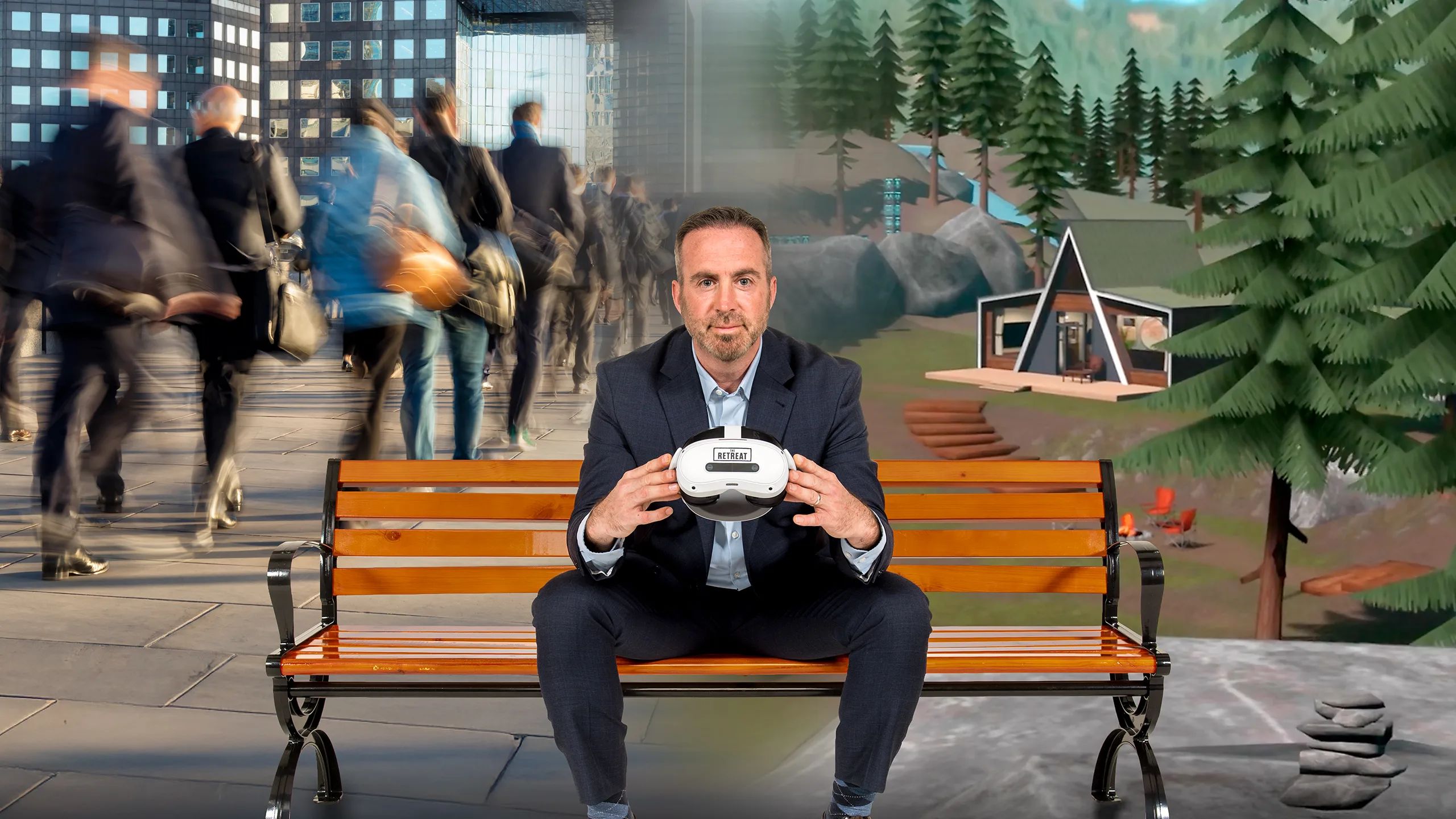
The Retreat That Follows You Home
When Jarrod Reisweber talks about addiction treatment in America, he doesn’t wear rose-colored glasses.
“Some recovery rates are as low as 4 percent,” he says. “What we have is not good enough.”
A clinical psychologist at Virginia Commonwealth University (VCU), Reisweber works closely with the Veterans Health Administration. He has spent much of his career treating people who return from military service to lives still full of battles: trauma, depression and substance use. What troubled him wasn’t any lack of compassion — it was the limited methods for delivering support. Therapy happened at 2 p.m. on a Tuesday. Cravings and triggers did not.
“Daily life can be loud, crowded, stressful and chaotic,” Reisweber says. “And your therapist can’t always be there. So, we asked, what if the support could always be there?”
The answer became The Retreat.

Round-the-Clock Support
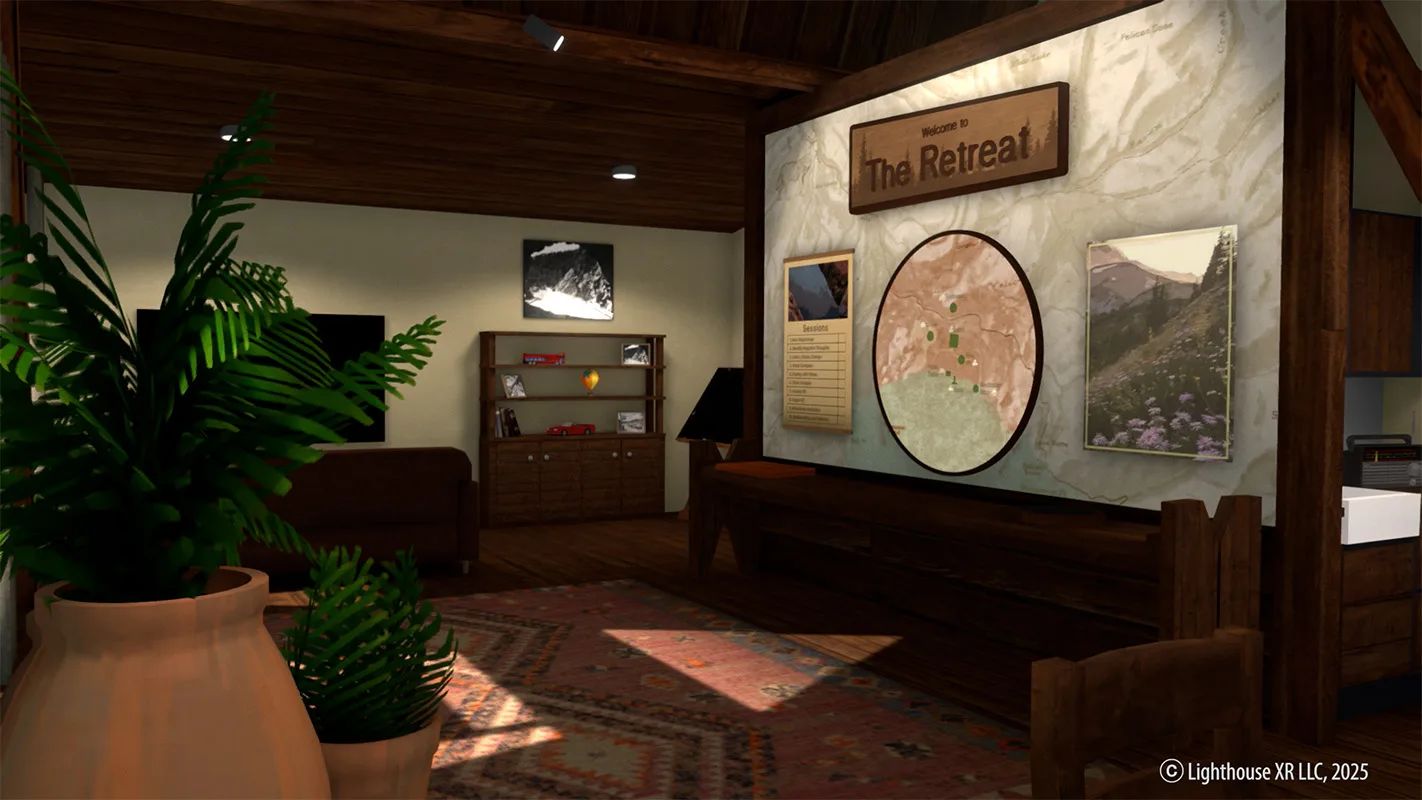
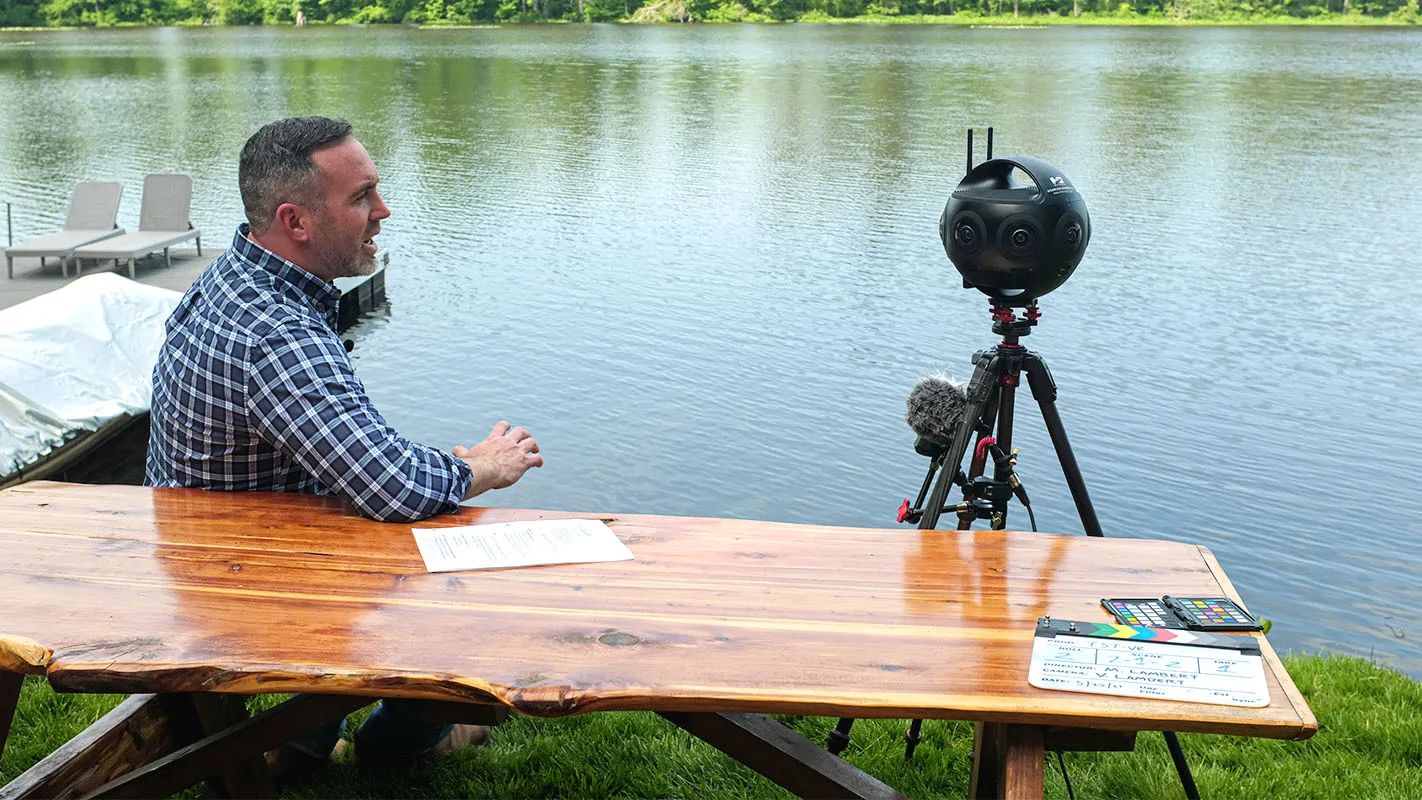
The Retreat, formally called Transcending Self Therapy (TST), is a virtual world built to support recovery. Patients put on a virtual reality (VR) headset and find themselves at a lakeside cabin in calm and quiet surroundings. Inside this world, they take guided sessions led by Reisweber, learning to breathe through their cravings, observe thoughts and connect with others in recovery.
“It’s not meant to replace therapy,” he says. “It’s meant to extend it. To be there at 2 a.m. when the trigger shows up.”
In other words, real life is unpredictable. Support for recovery needs to be portable—and available 24/7.
The VCU Difference
“At VCU, every time I had an idea, there was space for it to breathe,” Reisweber says. “I came from an Ivy League institution. Great place. But here, there’s a spirit of ‘let’s figure it out.’”
That mindset, paired with support from VCU’s Office of Innovation and Research, helped move his idea from concept to product. What started as a novel approach inside the Veterans Health Administration is now being studied, refined and prepared for wider use.
“It’s VCU taking on something the field wasn’t solving fast enough,” he says.
Built for Veterans, Scaled for Everyone
The Retreat began with veterans. Reisweber noticed that hospitals weren’t using evidence to inform open-group protocols for substance misuse and design support that addresses the whole person.
“With the help of VCU and Veterans Health Administration, we built one,” he says.
With VCU’s help, TST became both an individual and group program, complete with patient manuals and facilitator guides. Research soon followed—and the results were striking. Patients using TST showed recovery rates two to three times higher than standard treatment. Depression severity scores dropped. Relapse rates fell. More patients completed care.
“Those gains happen in session,” Reisweber says. Still, the question remained: “What happens at home? What happens when it’s the middle of the night and someone is triggered?”
VR became the next evolution.
Unavailable? Send The Retreat
“Addiction is a horrible disease,” Reisweber says. “And it strikes at the most inconvenient times.”
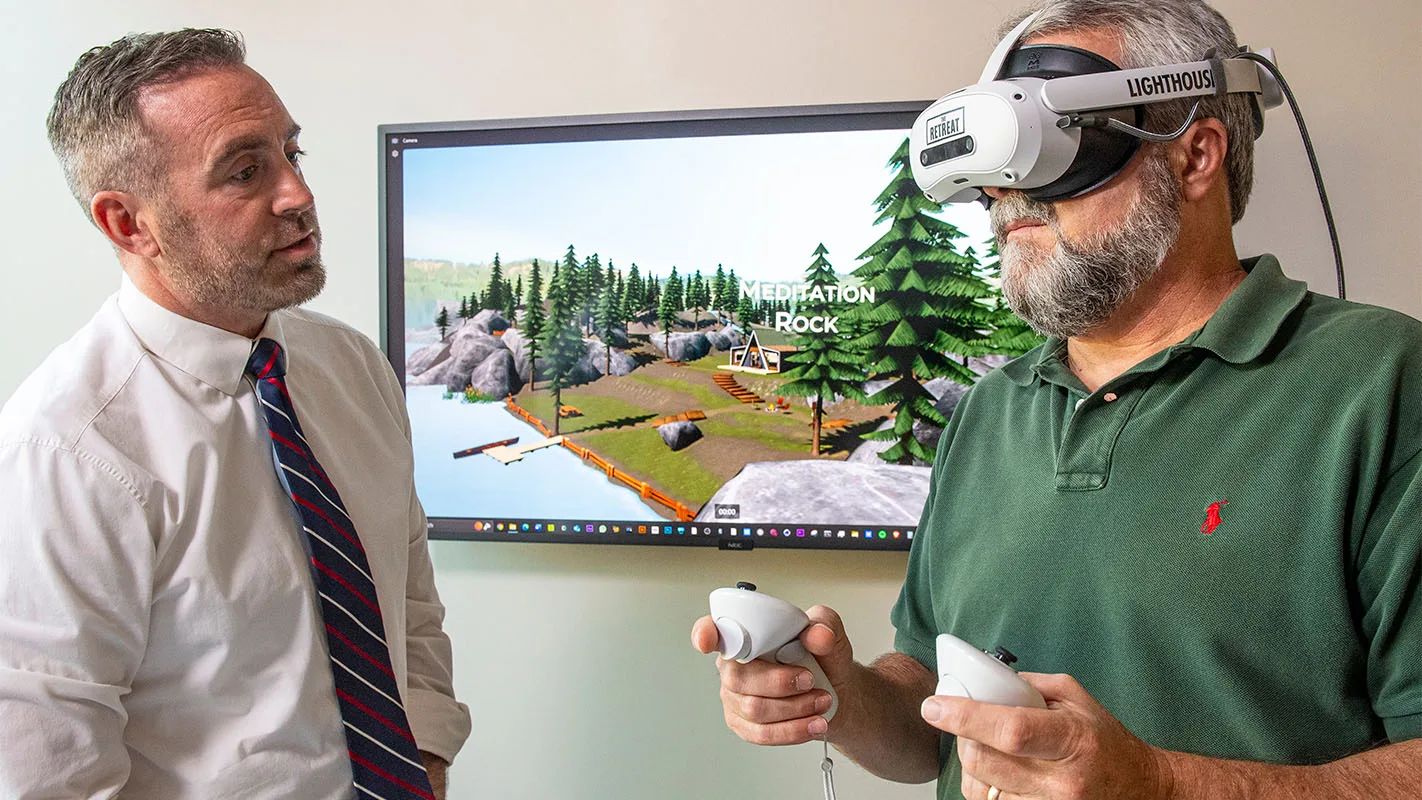
With a VR headset, patients can enter a calming virtual space any time they need it. They can listen, learn and practice coping skills on demand. It’s a way to extend therapy’s reach and make care more equitable.
A veteran in residential treatment can use it. A patient in rural Virginia can use it. A person who is embarrassed to walk into a clinic can use it.
“In VR, we can be there when the human therapist can’t,” he says. “That’s the power.”
Care Runs Deep
Reisweber’s commitment to addiction recovery is personal. He’s lost family members to addiction and seen its ripple effects firsthand.
His grandfather, a World War II bomber pilot, came home without the kind of treatment options available today. “I wish that treatments like the ones we’re developing at VCU were available,” Reisweber says.
That perspective drives him: “Having seen what addiction can do to a family, you don’t accept 4 percent recovery rates. You build something better.”
The Future is Unlimited
Reisweber admits he doesn’t know exactly where this work will go next—but he knows it’s only beginning. Clinical trials are underway. Expansion beyond veterans is planned. And more VR environments are already in development.
The mission remains the same: reach people where they are and make recovery possible.
“What I do know,” he says, “is that we’ll keep pushing for treatments that fit real lives.”
That is the heart of VCU’s uncommon spirit—not innovation for its own sake, but innovation that meets people at their hardest moments.
Proof that even in virtual worlds, VCU’s impact is undeniably real.
As a top 20 percent global university, Virginia Commonwealth University is an unparalleled powerhouse of innovation and creative problem solving. VCU attacks challenges as opportunities to do what others can’t. Or won’t. It’s truly a university unlike any you’ve ever seen.
Proof that even in virtual worlds, VCU’s impact is undeniably real.
As a top 20 percent global university, Virginia Commonwealth University is an unparalleled powerhouse of innovation and creative problem solving. VCU attacks challenges as opportunities to do what others can’t. Or won’t. It’s truly a university unlike any you’ve ever seen.
This custom content is sponsored by Virginia Commonwealth University and developed by Inside Higher Ed's sponsored content team. The editorial staff of Inside Higher Ed had no role in its creation.

 Built with Shorthand